
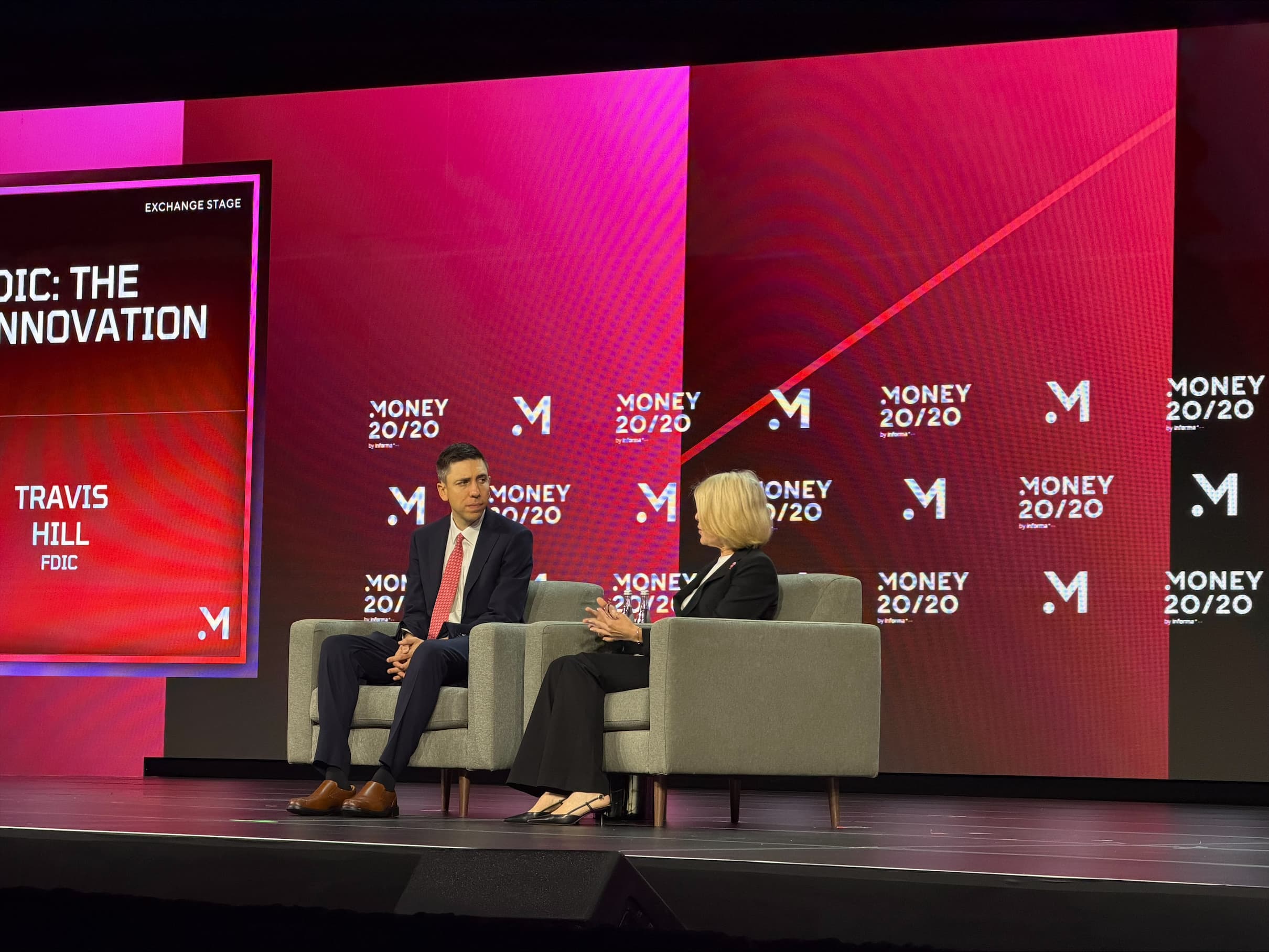
Day one at Money20/20 USA kept circling one question: when money moves itself, who carries the risk? On Tuesday the question did not go away, but it changed shape. Across the stages and in the news coming off the floor, the industry stopped waiting for someone else to answer it and started building the answer into standards, certificates and code. And the contest between tokenised deposits and stablecoins, still live on Monday, came close to being called off.
On Monday the liability question was asked about agents: if an AI buys something its owner did not intend, the issuer needs to know which agent it was and what it was allowed to do. On Tuesday the same logic was applied to everyone in the chain. In his keynote conversation with Penny Lee of the Financial Technology Association, The Federal Deposit Insurance Corporation (FDIC) Chairman Travis Hill described the standard-setting body the agency has been helping banks and fintechs design since the summer. Instead of every community bank running its own due diligence on the same fintech, independent assessors would check third parties against common standards that small banks can rely on. It would be run by the industry, and “this would be completely voluntary”.
The same idea is spreading to agents. Visa , BILL and Billtrust announced the first live pilot in which an AI agent pays supplier invoices through supplier portals, registered through Visa’s Trusted Agent Protocol and recognised by the supplier’s platform in place of the login and CAPTCHA a person would face.
Source link