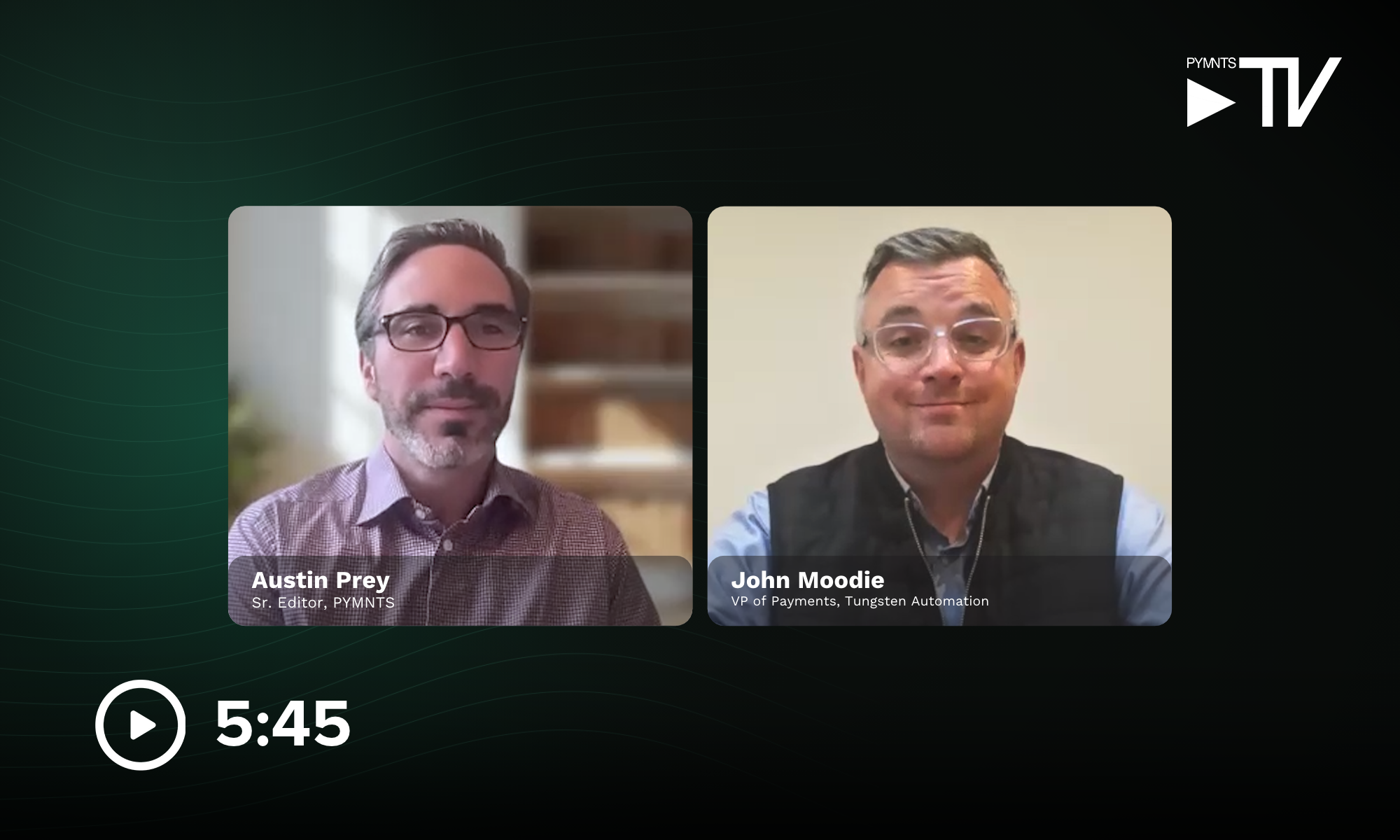
Watch more: What’s Next in Payments With John Moodie of Tungsten Automation
Complete the form to unlock this article and enjoy unlimited free access to all PYMNTS content — no additional logins required.
Business payments have been traditionally defined by what they’re not. They’re not simple, they’re not easy, and they’re certainly not fast.
As a result, and for decades, the business payments industry has measured its progress in increments of the inverse those defining qualities. Faster invoice processing would lead to faster approvals and faster settlement, ultimately closing the loop with faster reconciliation. This would make everything simple and easy.
But faster payments are here, and business payments still aren’t simple and easy. That tension was at the center of a recent discussion with John Moodie, vice president of payments at Tungsten Automation, for the November edition of the “What’s Next in Payments” series, “From Good to Great in 2027.”
“Good companies will obviously look to automate more tasks, but great companies will connect those tasks so the business is able to make better financial decisions,” Moodie said, noting that the next breakthrough in financial operations has less to do with how quickly money moves than with how much work remains after it arrives.
“If payment executions looks fast, but there’s a huge reconciliation work, manual work that happens after that, then you shouldn’t be able to declare victory,” Moodie said.
For CFOs, that distinction could change how automation investments are evaluated, how payment performance is measured and who becomes accountable when supposedly successful transactions create problems elsewhere.
Source link