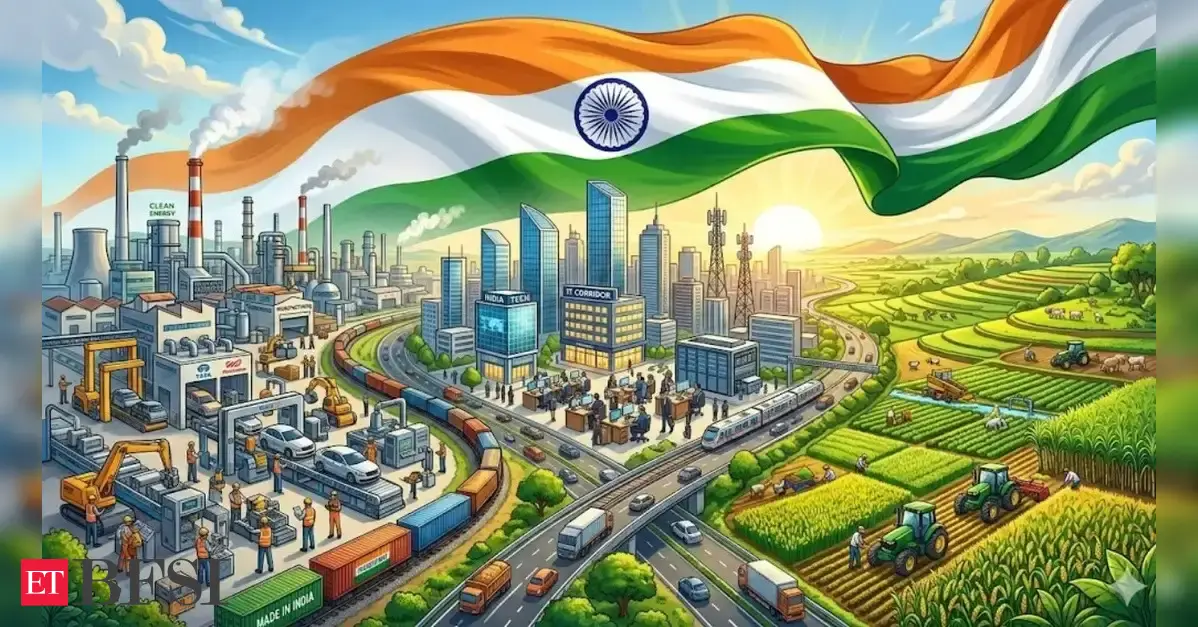
The Indian economy is currently telling two parallel stories. If one is true, the other can also have merit. If BKC, Mumbai’s financial hub, contributes significantly to India's economic output while Asia’s largest slum lies just a few kilometres away, can we afford to ignore either reality? Both narratives are true, but people tend to privilege the one that most closely mirrors their lived experience
Dear Readers, Of the people, by the people, for the people, Abraham Lincoln. There is one question that keeps recurring: Is this Gen Z protest, allegedly driven by “cockroaches”, as some claim, a genuine expression of public discontent or a politically orchestrated movement? While I am trying to make my own observations and verify the facts, I would like to examine one economic dimension of the issue. New Delhi: Advocate Prashant Bhushan, and others during a press conference at the Press Club of India, in New Delhi. Dipke announced a national 'Lehra Do Tiranga' demonstration scheduled for Oct. 16 to protest against the detention of party activists and student leaders during ongoing demonstrations against Chief Election Commissioner Gyanesh Kumar. (PTI Photo/Arun Sharma)(PTI10_15_2026_000335B)
In the world of finance and economics, doves, hawks, bulls, bears and unicorns are familiar terms, but one term that rarely enters mainstream discourse is “cockroaches”. The cockroach theory is particularly relevant for companies when growth becomes elusive and survival becomes the overriding priority. I wrote an article on fintech companies adopting the cockroach theory two years ago. Advt
But suddenly, “cockroaches” has emerged as a talking point following the protests in Delhi.
Source link