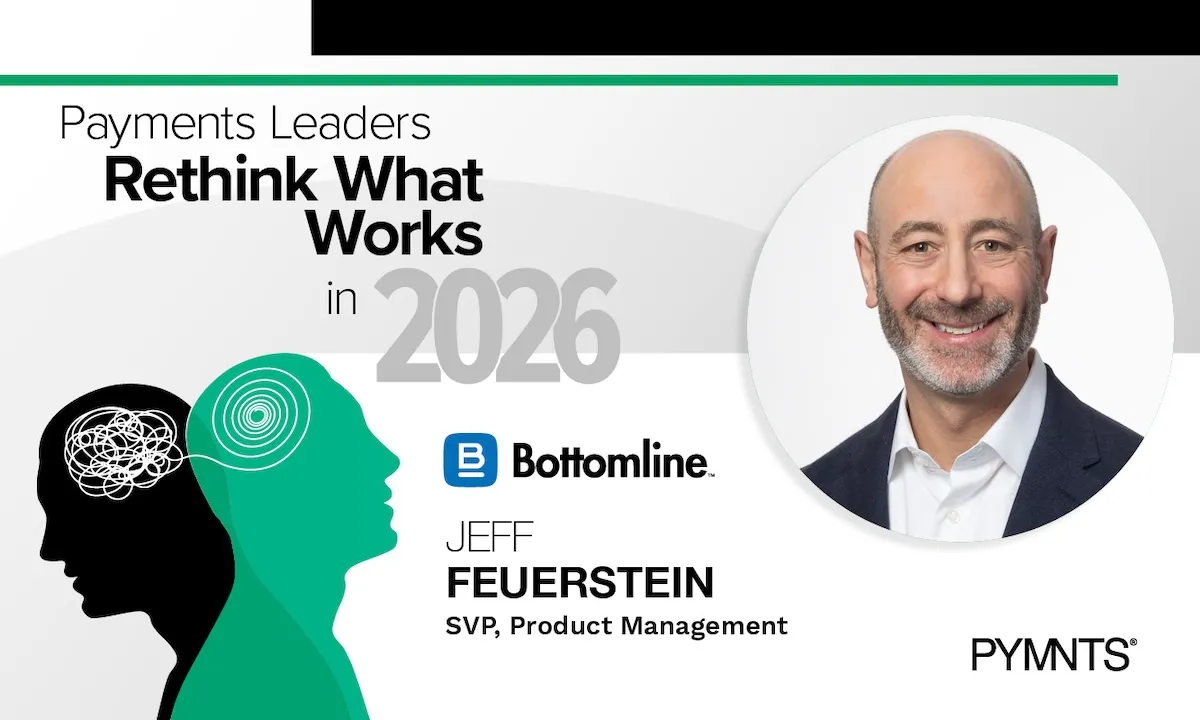
Customers are willing to adopt AI, but they still want guidance from people who understand business, Bottomline SVP, Product Management Jeff Feuerstein writes in a new PYMNTS eBook, “Payments Leaders Rethink What Works in 2026.”
Complete the form to unlock this article and enjoy unlimited free access to all PYMNTS content — no additional logins required.
In January, I was convinced like many others that we were heading toward a “SaaSpocalypse.”
Every week brought another headline about artificial intelligence outright replacing software, eliminating the need for specialized applications, and reducing barriers to entry. The prevailing view was, and for some people still is, that AI would become the product, and that years of accumulated expertise embedded in software platforms would become less important.
I wasn’t sure every prediction in that vein would come true, but signs indicated that businesses were searching for technology to solve business problems, and that AI models would become the primary source of competitive advantage.
It wasn’t because of a single event. Instead, it was a series of conversations with customers and prospects who I expected to be focused on AI as its utility and popularity grew. I kept hearing something different. Customers weren’t asking who had the newest model or the most AI features. They wanted to know who understood their business the best, and then how AI could improve specific issues they were facing.
I saw this repeatedly in payments and financial operations. Customers were willing to adopt AI, but they still wanted guidance from people who understood the sensitivity of payment data, complex payment workflows, fraud risks, compliance requirements, vendor dynamics and the realities of managing payment and financial operations across large teams, organizations and systems.
Source link