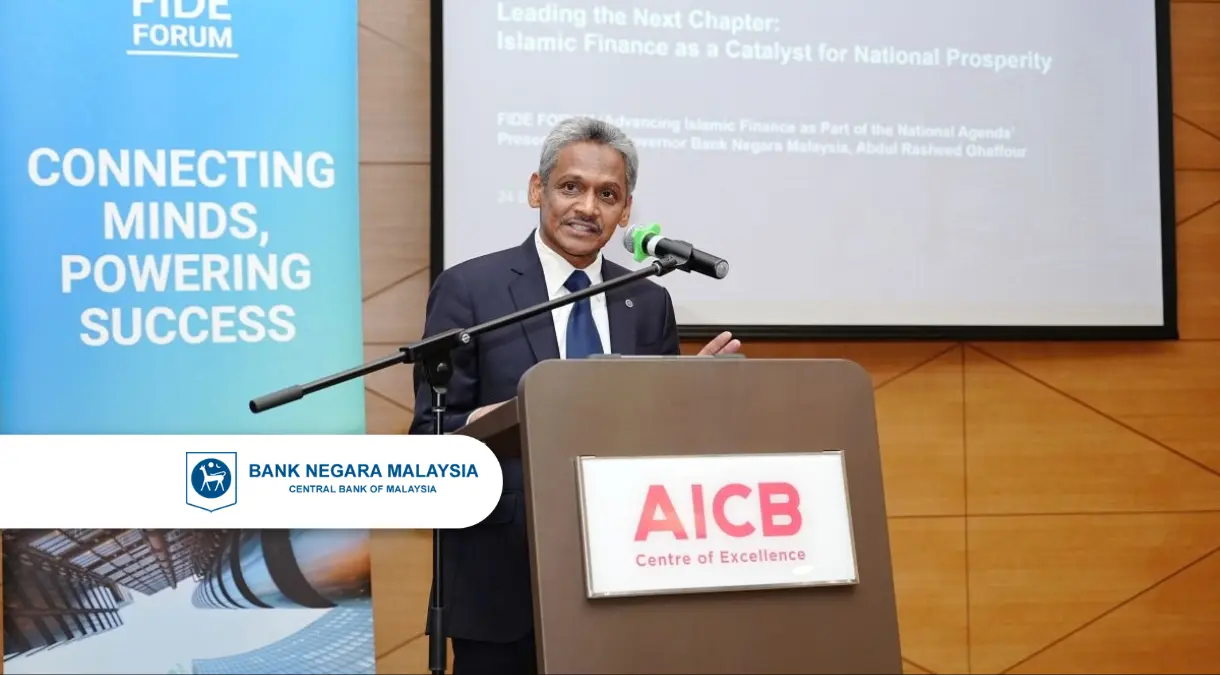
Islamic finance needs to move beyond traditional financing models to support more complex and capital-intensive industries, according to Bank Negara Malaysia (BNM).
Governor Abdul Rasheed Ghaffour said the country’s next phase of growth will require more specialised financing for areas such as advanced manufacturing, technology-intensive activities and the energy transition.
These sectors often involve longer investment horizons, larger upfront capital needs and higher technology and execution risks.
Despite national efforts to develop higher-value industries, financing remains concentrated in services, while manufacturing funding is still modest relative to the investment required.
Abdul Rasheed noted that Islamic finance is well placed to address some of these needs through risk-sharing structures and more flexible financing models.
Islamic banking accounted for 48% of total financing in 2025, up from 25% in 2015, while the Islamic capital market grew from RM420 billion to RM670 billion over the same period.
BNM also sees scope for greater use of sector-specific Shariah structures and social finance to support emerging industries.
Financial institutions will also need stronger capabilities in sector analysis, structuring, data, talent and partnerships.
The direction will form part of BNM’s upcoming Financial Sector Blueprint 2027–2030, which is being developed around priorities including resilience, higher-quality jobs, sustainable businesses, renewable energy and climate readiness.
Featured image: Edited by Fintech News Malaysia, based on image by BNM
The post BNM Sees Bigger Role for Islamic Finance in Emerging Industries appeared first on Fintech News Malaysia.
Source link