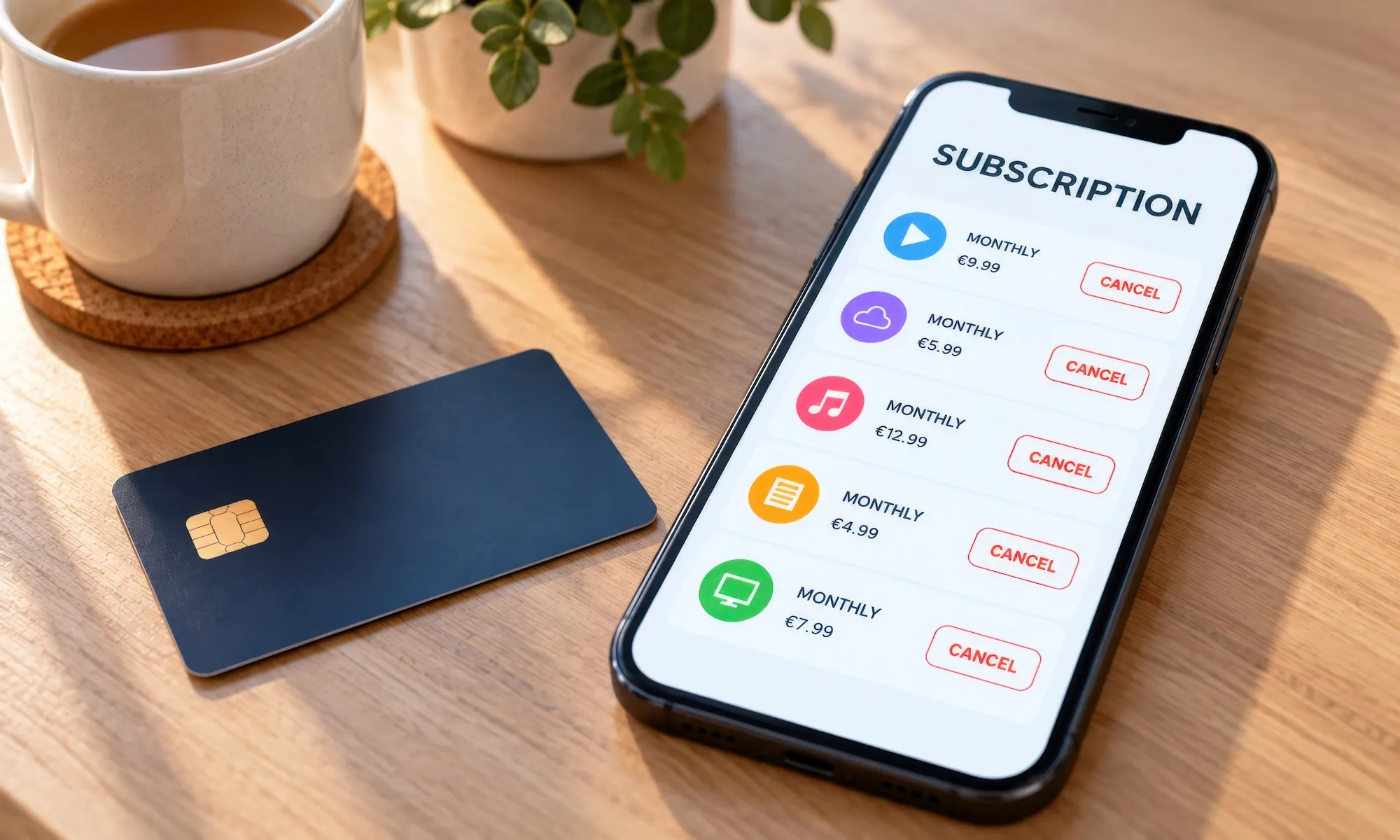
Card issuers are making it easier for customers to transfer established subscription payments.
Billing inquiries remain a source of customer service work for financial institutions and merchants.
Subscription management is becoming part of the everyday business of banking. As issuers add controls for recurring payments, they are taking on some of the work historically handled by merchants, from identifying unfamiliar charges to facilitating subscription cancellations where supported.
Complete the form to unlock this article and enjoy unlimited free access to all PYMNTS content — no additional logins required.
The October PYMNTS Intelligence report “Keep the House, Cut the Subscription: How Consumers Rank Spending” found that consumers living paycheck to paycheck without difficulty paying bills were nearly as likely as those struggling financially to put subscriptions among their first spending cuts.
Among consumers who had purchased subscriptions in the previous year and considered them discretionary, the respective shares were 57% and 60%. Even among those who did not live paycheck to paycheck, 39% identified subscriptions among the first expenses they would reduce or eliminate.
Within the past three months, banks in the United States, New Zealand and the United Arab Emirates have introduced new ways to manage recurring spending. U.S. Bank’s Oct. 19 launch of Payment Switch lets customers move eligible subscription payments to its cards through its banking app. In September, Citi introduced Mastercard’s Smart Subscriptions in the UAE, its first deployment of the technology globally.
On Nov. 19, Visa introduced Recurrent . New Zealand’s Kiwibank became the first issuer to offer the service, displaying eligible recurring card payments, including the merchant, amount and frequency.
Source link