Artificial intelligence (AI) is rapidly transforming banking across credit, treasury, and enterprise risk.
According to a new survey by FT Longitude, SAS, and Microsoft, AI adoption has reached near-universal levels at financial institutions, supporting these organizations in their decision-making.
The research, which polled 300 credit, treasury and risk leaders at banks across 31 countries in June and July 2026, found that 82% of banks now use generative AI (genAI), and 41% use agentic AI in their decision-making processes. When combined with traditional, predictive AI such as machine learning (ML), 299 of the 300 banks use AI in credit and risk choices, underscoring a swift rise in adoption.
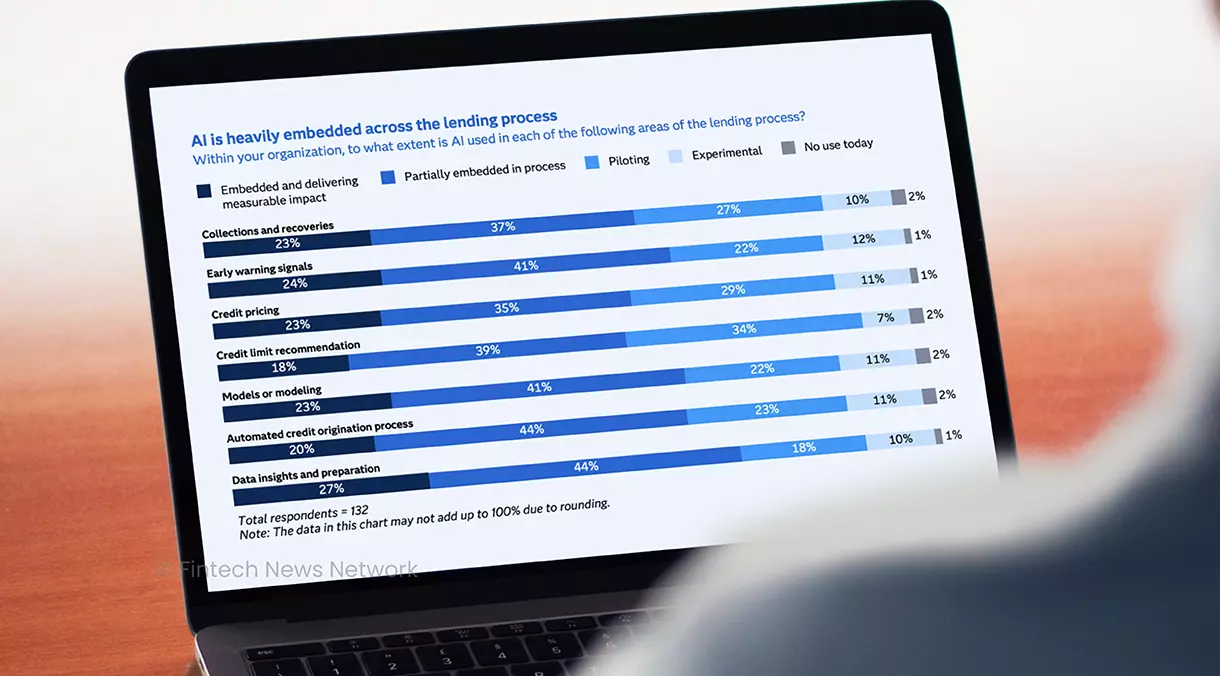
These levels reflect more than casual use. Some 59% of respondents have moved beyond experimentation, with 44% reaching partial, and 15% widespread embedding of the technology within decision-making. This extent of use is consistent across credit, treasury, and enterprise risk areas.
A breakdown of AI adoption across functions reveals that, with just one exception, every bank surveyed is using AI to some degree in half or more of these banking processes. On average, across the main credit risk processes, 63% had partially or widely embedded AI, while 55% did so in asset liability management and risk steering.
AI is also influencing decisions related to credit and capital management areas. For over 50% of respondents, AI is now shaping or making credit-related decisions in origination, customer management, as well as collection and recoveries. However, the technology is less frequently involved in capital and portfolio composition, yet over four in ten banks surveyed still use it in this capacity.
Source link