A shopper who hands a purchase to an artificial intelligence (AI) assistant also hands the merchant a new job at checkout: recognizing the customer behind the software.
Complete the form to unlock this article and enjoy unlimited free access to all PYMNTS content — no additional logins required.
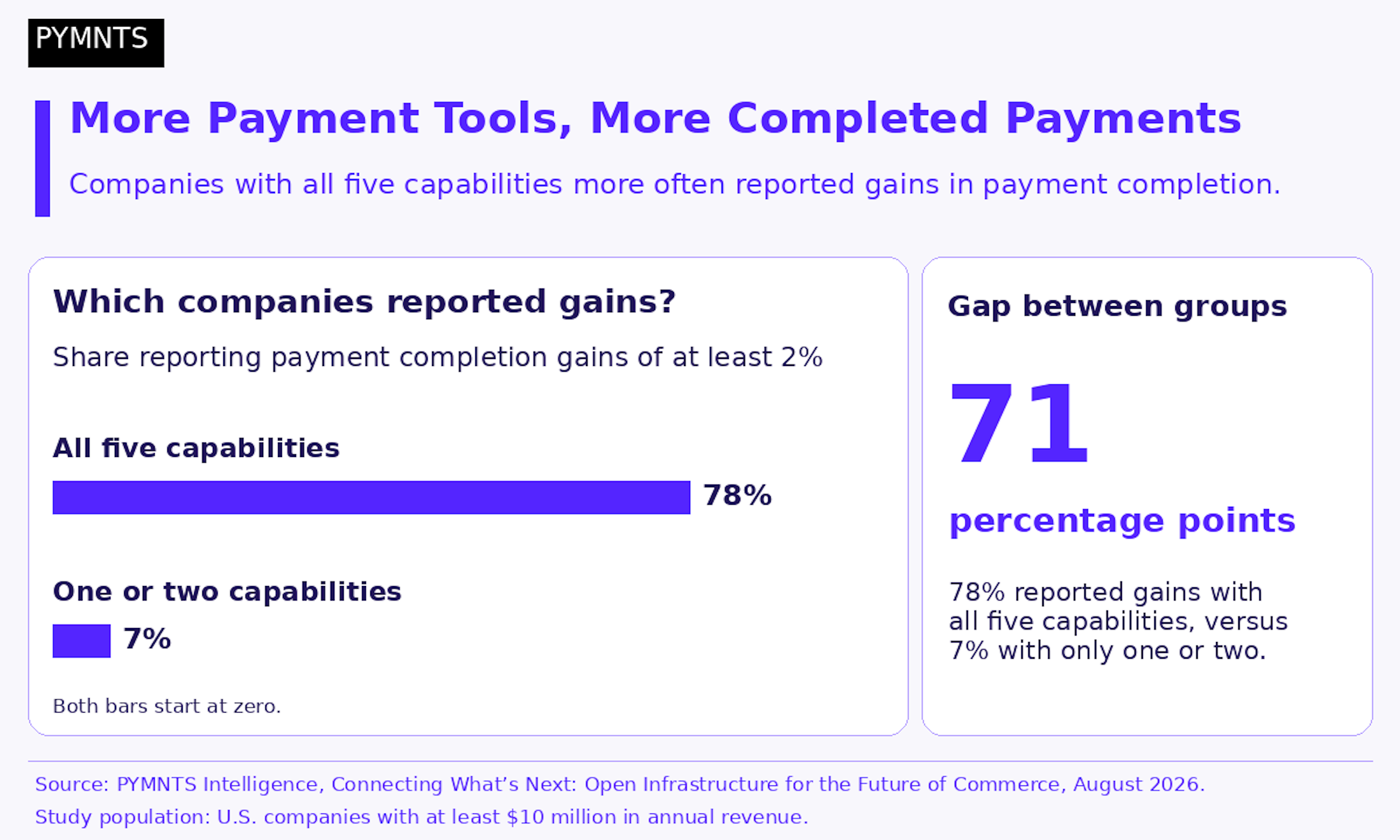
That’s the third key finding in “Connecting What’s Next: Open Infrastructure for the Future of Commerce,” the August edition of the PYMNTS Intelligence Optimizing Payments Tracker® series. The report examines how merchants can adapt as AI assistants begin placing orders, more customers use digital wallets and marketplaces pay sellers across borders. Merchants that connect their payment providers through a shared system can change how they handle a transaction or add a payment method without rebuilding checkout each time.
For marketplaces, the same approach can help after checkout. A marketplace may collect a buyer’s payment through one system and pay an overseas seller through another, leaving staff to match the records and handle currency conversion. Connecting those steps gives the marketplace a way to follow the money from buyer to seller, whether the customer placed the order personally or sent an assistant to do it.
At PYMNTS Intelligence, we work with businesses to uncover insights that fuel intelligent, data-driven discussions on changing customer expectations, a more connected economy and the strategic shifts necessary to achieve outcomes. With rigorous research methodologies and unwavering commitment to objective quality, we offer trusted data to grow your business. As our partner, you’ll have access to our diverse team of PhDs, researchers, data analysts, number crunchers, subject matter veterans and editorial experts.
Source link