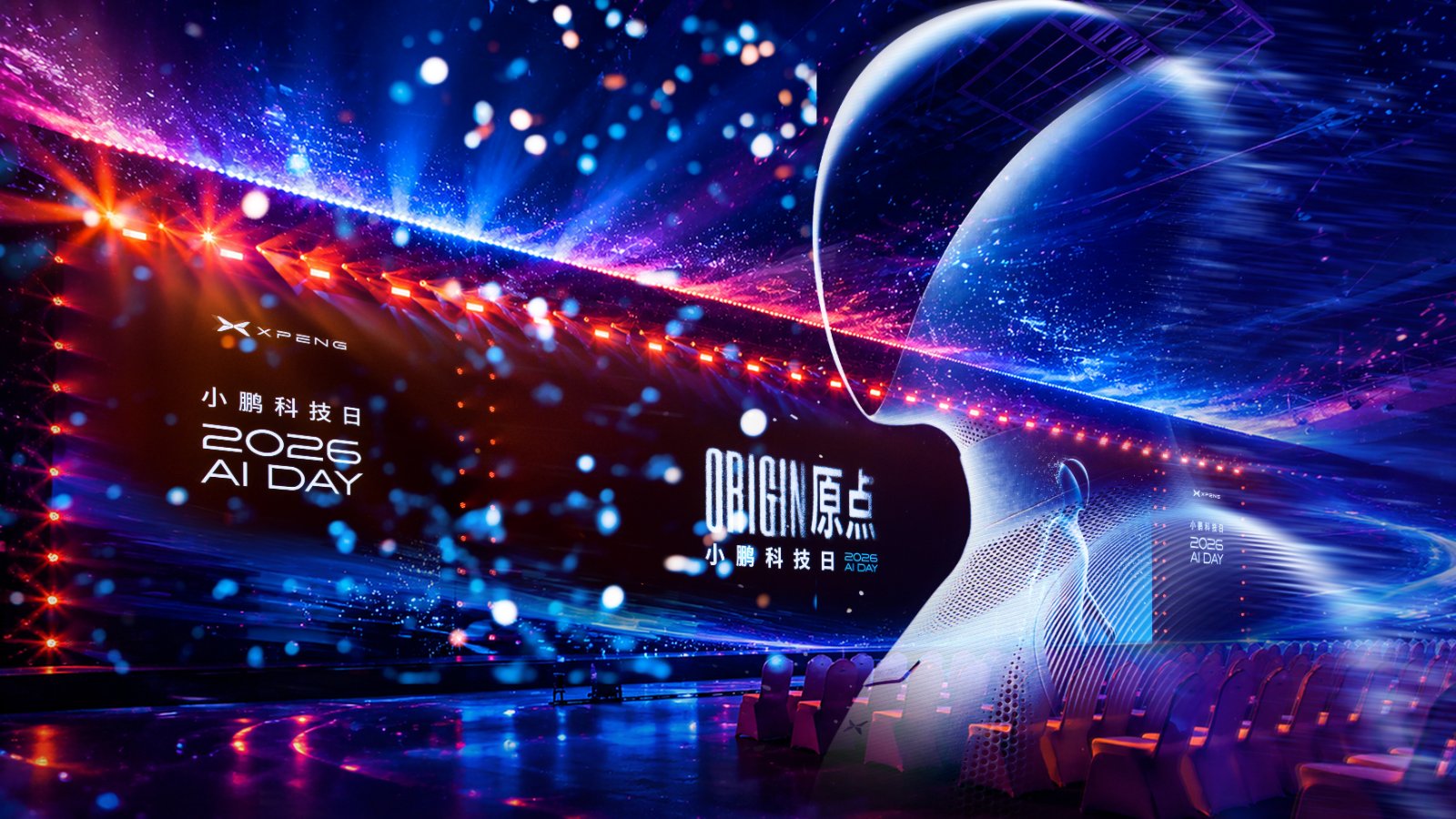
Xpeng (NYSE: XPEV) held its 2026 AI Day on Wednesday in its headquarters city of Guangzhou, unveiling a roadmap spanning humanoid robots, robotaxis, and smart driving as it doubles down on physical AI.
He Xiaopeng, Xpeng chairman and CEO, said at the event that the industry has long severely underestimated the difficulty of implementing AI in the real physical world, and that Xpeng's latest solution represents a rethinking of this.
Physical AI faces multiple hard constraints — including regulations, safety, cost, hardware bodies, and power — that cannot be solved merely by scaling up model capabilities, he said.
Unlike autonomous driving firms focusing solely on chassis control or Silicon Valley players betting exclusively on general-purpose large models, Xpeng unveiled its Turing Physical AI Architecture (VLA 3.0) to connect the full stack through what it called a 3-layer coordination.
The architecture links System 0 for underlying real-time hardware control, System 1 powered by the second-generation Vision-Language-Action (VLA 2.0) model, and System 2 for task planning and reasoning.
Through this shared technology foundation, Xpeng's smart vehicles, robotaxis, humanoid robots, and flying cars can reuse computing power, data, and safety systems, diluting marginal R&D costs.
At Xpeng's AI Day a year ago, the Iron humanoid robot's gait looked so lifelike that skeptics questioned whether a person was hidden inside, prompting the team to cut open its leg casing onstage to prove otherwise.
This year, Iron walked onto the stage autonomously, held a real-time voice interaction and delivered a speech with He, and then walked back to its charging spot on its own.
Source link