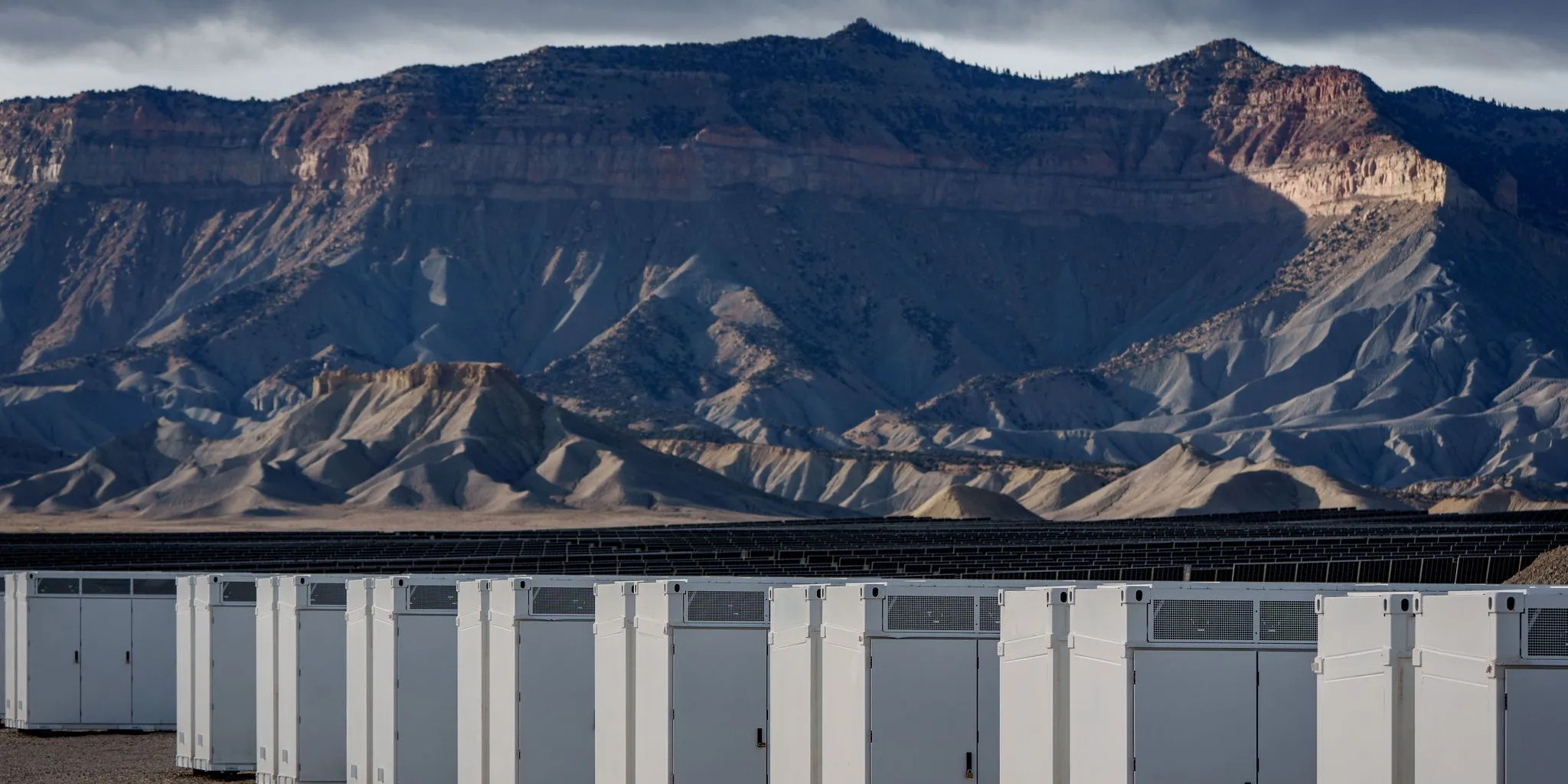
The US has installed more than 200 gigawatt-hours (GWh) of battery storage, with nearly 50 GWh coming online in the first nine months of 2026 alone.
The US added 48.3 GWh of battery storage through September, up 20% from the same stretch last year, according to the latest report from the Solar Energy Industries Association (SEIA) and Benchmark Mineral Intelligence. Q3 was a little slower: The US installed 14.3 GWh in those three months, down 1% year over year.
Texas added 12.3 GWh of grid-scale batteries through September, more than any other state. Arizona came in second at 7.7 GWh, followed by California at 6.8 GWh. And 11 states had already broken their annual storage installation records with three months to go – Colorado, Massachusetts, Utah, Michigan, Georgia, Mississippi, Virginia, Iowa, Montana, Alabama, and Illinois.
Utility-scale batteries did most of the work in Q3, accounting for 12.2 GWh of new capacity. Businesses and industrial sites added another 1.3 GWh, and residential added 746 megawatt-hours (MWh). That was the best Q3 yet for home batteries, though installs through September were still down 12% year over year. Some homeowners moved up their installations last year before the federal residential clean energy tax credit ended.
“States are moving from targets to centralized procurements,” said Pete Tillotson, a senior analyst at Benchmark. In September, New York awarded contracts for eight battery projects that can deliver about 950 megawatts (MW) combined. 7% from their previous forecast.
Source link