This tech co claims AI-led virtual twins can deliver 10x engineering gains, help OEMs match ‘China speed’
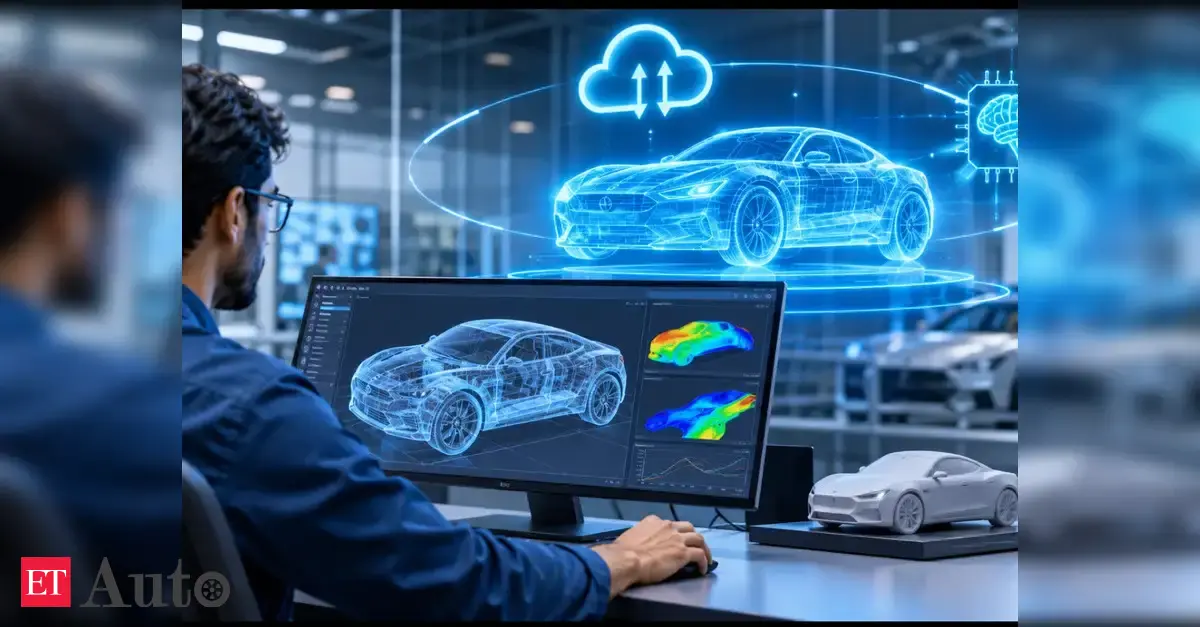
As SDVs and rapid electrification push automakers to compress product cycles and rein in R&D costs, Dassault Systèmes is betting on sovereign agentic AI and cloud-native ‘ModSim’ to transform automotive engineering and keep pace with demand for speed and innovation.
Share Icon Copy Link Share on Whatsapp Share on Linkedin Share on X Share on Telegram Share on Facebook
The company’s integrated ModSim and sovereign AI capabilities are also reshaping engineering workflows, enabling faster validation, greater IP protection and significant productivity gains.
Computer-aided design and engineering (CAD / CAE) tools were widely viewed across the automotive industry as commodities for over a decade since 2010, prompting many automakers to outsource core functions. Today, as vehicles transition from mechanical hardware to software-defined gadgets on wheels, that trend is reversing.
"Modeling and simulation is coming back at the heart of the game," Olivier Sappin, CEO of CATIA at Dassault Systèmes , tells ETAuto . "People suddenly see that if they master the right digital tools, they can accelerate product development like never before. It's no longer a 10 or 20 per cent improvement in gain—sometimes it could go up to a factor of 10 in some use cases."
Tracing Dassault Systèmes’ virtual-twin journey back to 1981, Sappin noted that a three-decade-old engineering dream is finally converging through cloud computing and artificial intelligence. Nearly 80 per cent of automotive companies now use Dassault Systèmes 3D software suite CATIA (Computer-Aided Three-Dimensional Interactive Application) on the 3DEXPERIENCE platform, with cloud adoption eliminating the two-year lag typical of heavily customised legacy setups.
Source link