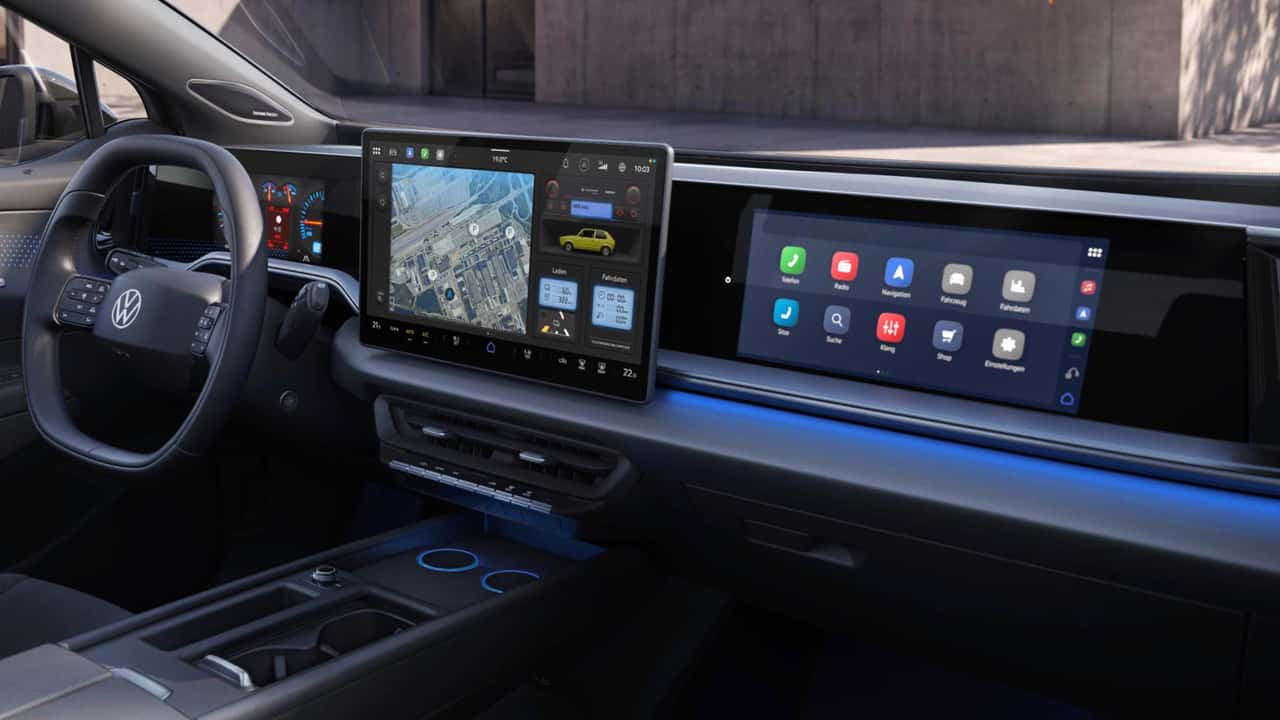
Volkswagen Group could turn to software developed in China for many of its future European cars, potentially saving billions of euros in development costs. According to a report from Manager Magazin, Thomas Schäfer, head of the core brand, wants to expand the use of the group's China-developed electrical and electronic architecture across much of its European lineup, potentially replacing technology planned with American partner Rivian.
The proposal would mark a major shift in the company’s software strategy. Until now, the group has largely planned to use different architectures by market, with technology developed in China intended primarily for local vehicles and software from its global R&D centers earmarked for other regions.
Schäfer now wants to change that approach for many of the group's volume models. If the proposal gets the green light, future electric cars from VW, Skoda, and Cupra could use the China-developed architecture, with potential applications including high-volume products. As for Seat, the Spanish brand's future looks increasingly uncertain, with shutting down as a worst-case scenario under consideration.
The financial argument is difficult to ignore. According to Manager Magazin, people familiar with the proposal estimate that VW Group could save between €4 billion and €5 billion ($4.5B and $5.5B) by switching to the Chinese architecture for its most important vehicle segment.
The report also highlights the cost difference between the two development operations. An hour of development work at the Rivian and Volkswagen Group Technologies (RVT) joint venture in Palo Alto reportedly costs roughly four times as much as at the Volkswagen Group China Technology Company (VCTC) in Hefei.
Source link