Over the past few weeks, I’ve had the opportunity to see firsthand just how rapidly the global shipping industry is changing, and what I’ve seen has left me more convinced than ever that Tasmania has an extraordinary opportunity ahead of it.
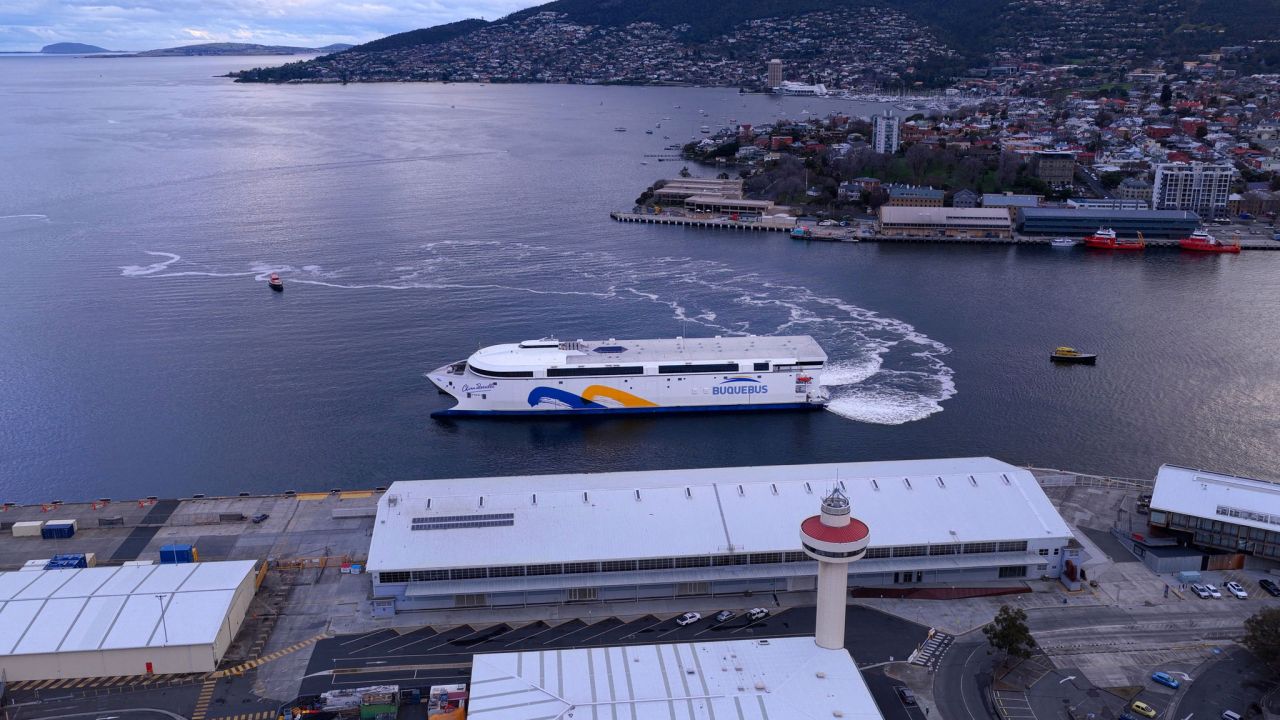
I recently travelled to South America to see our latest ship, Incat Hull 096 or China Zorrilla, delivered before entering commercial service between Argentina and Uruguay.
To see the world’s largest battery-electric ship, built right here in Tasmania, carrying passengers across the River Plate was a very proud moment for me.
But what was particularly pleasing was the excitement surrounding the vessel. People wanted to see it, experience it and understand what this ship means for the future of their industry.
For many years, there has been considerable discussion about how the shipping industry will reduce its emissions. There have been many different ideas put forward, from hydrogen and ammonia to various alternative fuels.
Having just returned from the Interferry conference in Thailand, I can tell you that the conversation is changing rapidly.
Electric propulsion was front and centre. There is a growing recognition across the industry that, for short-sea shipping, battery-electric propulsion is the way forward.
The interest in Hull 096 was extraordinary. Many of the world’s ferry operators are keen to see the vessel in operation for themselves, and there is enormous anticipation surrounding the three large electric ferries we’re currently building in Tasmania for Danish operator Molslinjen.
These ships will demonstrate that electric ferries can operate at speeds of more than 40 knots and recharge in around 30 minutes, allowing operators to maintain their existing schedules without burning fossil fuels.
Source link