Somewhere in the US there’s an EV charging site where a Southwire field engineer pulled the wire out of its conduit, months after the site went live, and found tire tracks on it. Somebody had driven over the cable while it lay on the ground waiting to be pulled in. At another site, debris that fell into the conduit wore through the jackets until hot shorted to neutral and the dispenser went dark. Nobody designs for that. But as Joe Fawcett tells it, nobody should be surprised by it either, because the conventional way of building the underground half of a charging site hands a coil of taped-up wire to the jobsite and hopes.
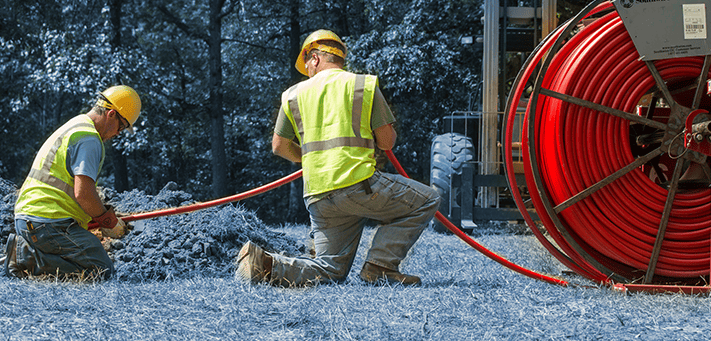
Fawcett is a Business Development Sales Manager for eMobility Infrastructure Solutions at Southwire, the Georgia wire and cable maker, and his half of the site runs from the utility transformer to the dispenser: medium-voltage feeders, duct banks and the company’s cable-in-conduit (CIC) product, which arrives on one reel with the conductors already inside the HDPE. His colleague Kevin Wahl, Lead Consulting Engineer in Southwire® CableTechSupport Services group, supports the other half: the charging cable that hangs off the dispenser and gets twisted, kinked and run over by the public. Southwire told Charged in a 2025 interview that roughly 95% of its EV charging cables are built to project-specific requirements, which gives Wahl a wide view of what goes wrong.
The two halves share a problem, which is heat, and a trend, which is more current through less conductor.
Source link