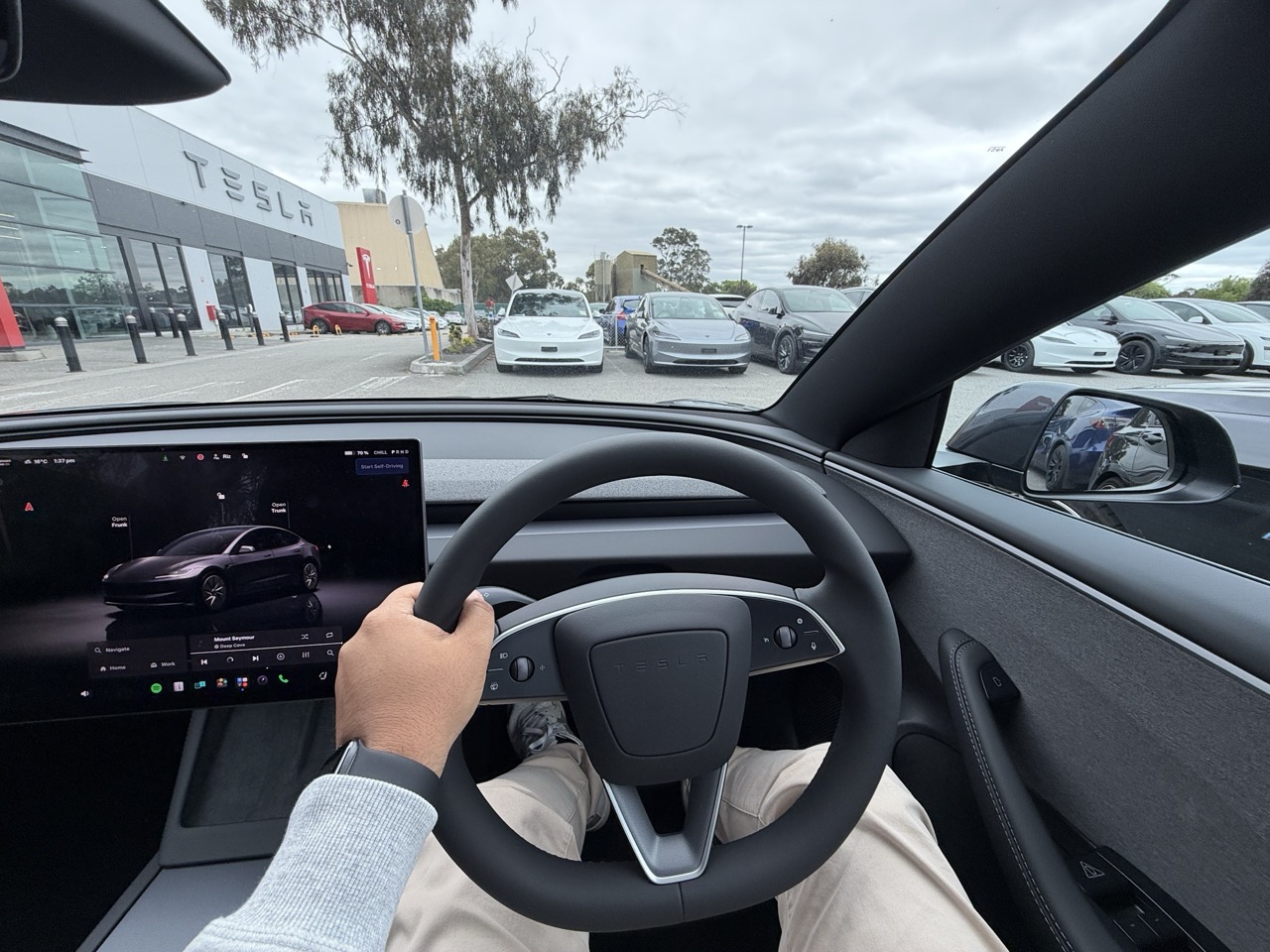
Last month, Tesla added to its 2026 Model 3 sedan range with a sharply priced entry variant, starting at $45,900 plus on-road costs.
Tesla will be hoping the lower price encourages more Australians to test drive a Tesla, and potentially buy one – which at the time of writing is still the only car to offer Full Self-Driving (Supervised) technology in Australia.
To test how far the tech itself has come and if there are any major features missing from this entry-level model, I spent a few days putting the new entry-level Model 3 through local roads and highways.
As many of our regular readers would know, my test route usually involves highway driving on the Peninsula Link between Melbourne and Rye, along twisting mountain climbs around Red Hill.
For this test, though, I used FSD supervised, which comes at $149/month, to see how much progress Tesla has made on Australian roads with this tech. Here is how it went.
Driving south on the Peninsula Link toward Rye, the Model 3’s updated suspension and sound insulation are still pretty good, much better than the 2021 Tesla Model 3 RWD with double-glazed front windows that I often drive.
While there is still on-road noise from rougher patches of the highway, even at 100 km/h, it’s well isolated, and unlike some other cars at this price point, I didn’t have to crank up the volume on my podcast to hear through.
Turning on FSD Supervised on the highway is easy with one button on the steering wheel, but usually I’d just enter the end destination before taking off.
Source link