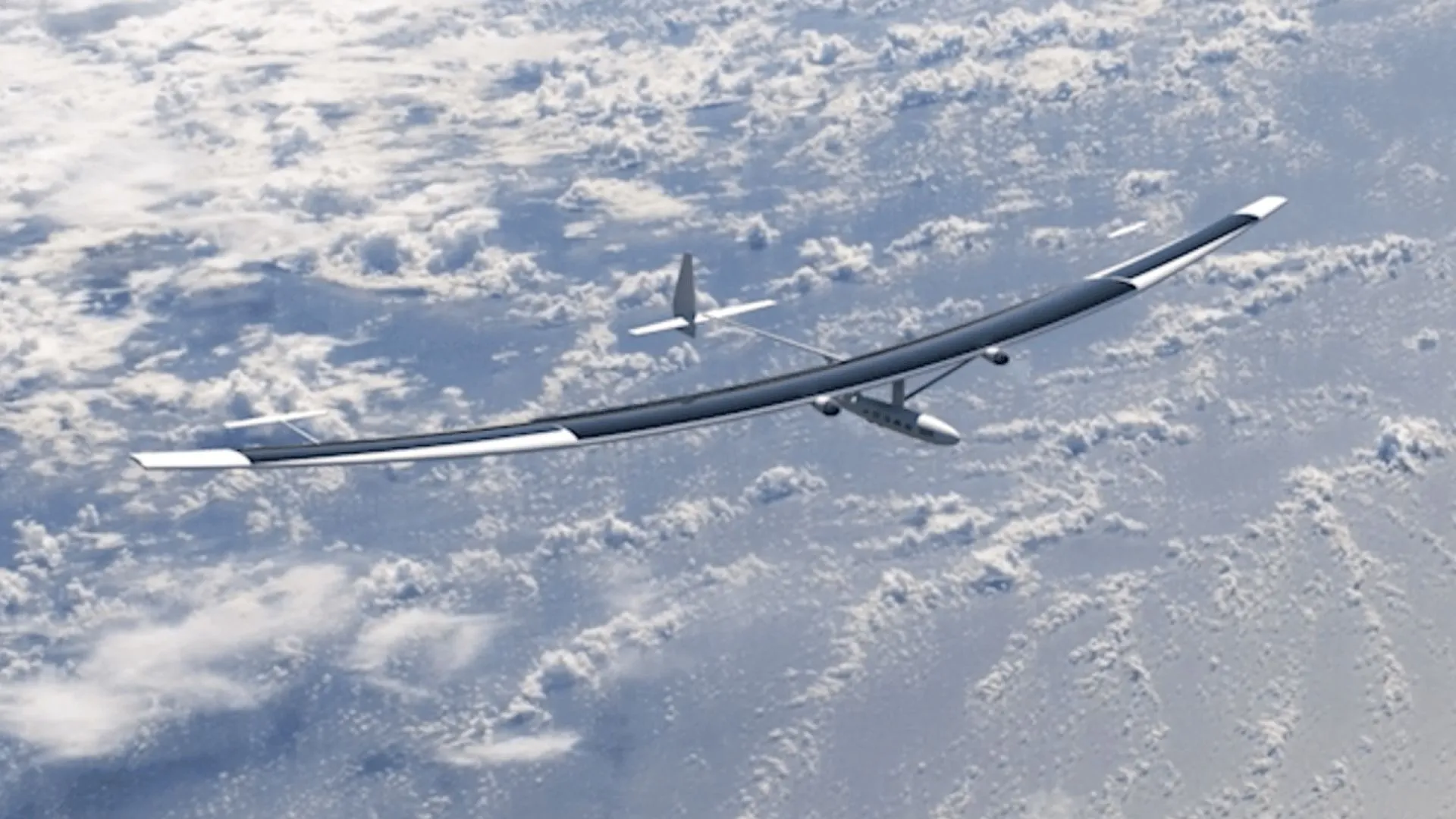
Keeping a solar-powered aircraft in the sky after sunset requires a difficult trade-off: larger batteries store more energy, but their weight makes the airplane consume more power.
A new US-led study identifies a battery performance target that could help pilotless aircraft stay airborne for weeks or months.
Their analysis identifies an energy density of 500 watt-hours per kilogram (Wh/kg) as an important threshold for persistent solar flight across regions where atmospheric conditions permit.
Such aircraft would operate in the stratosphere, around 60,000 feet above Earth, collecting observations for climate research, hurricane tracking, and wildfire monitoring.
Solar panels would power daytime operations and charge batteries to sustain flight through the night.
Craig Mascarenhas, who spearheaded the study through Harvard atmospheric scientist Jim Anderson’s laboratory, described the engineering challenge.
“It’s this circular mathematical relationship where you need more energy storage, but the batteries become heavier, so now you need more power to push it through the air to get more lift,” he explained.
The researchers argue that battery development for these aircraft should prioritize energy density, which measures how much energy a battery stores relative to its weight.
Power density, which describes how quickly that energy can be delivered, is less critical here. These aircraft require relatively little power, but must carry enough stored energy to keep flying throughout the night.
The proposed threshold is roughly double the approximately 250 Wh/kg figure cited for commercial electric-vehicle batteries . Experimental and specialty cells already reach around 400 Wh/kg, bringing the target closer, although cost remains a barrier.
Source link