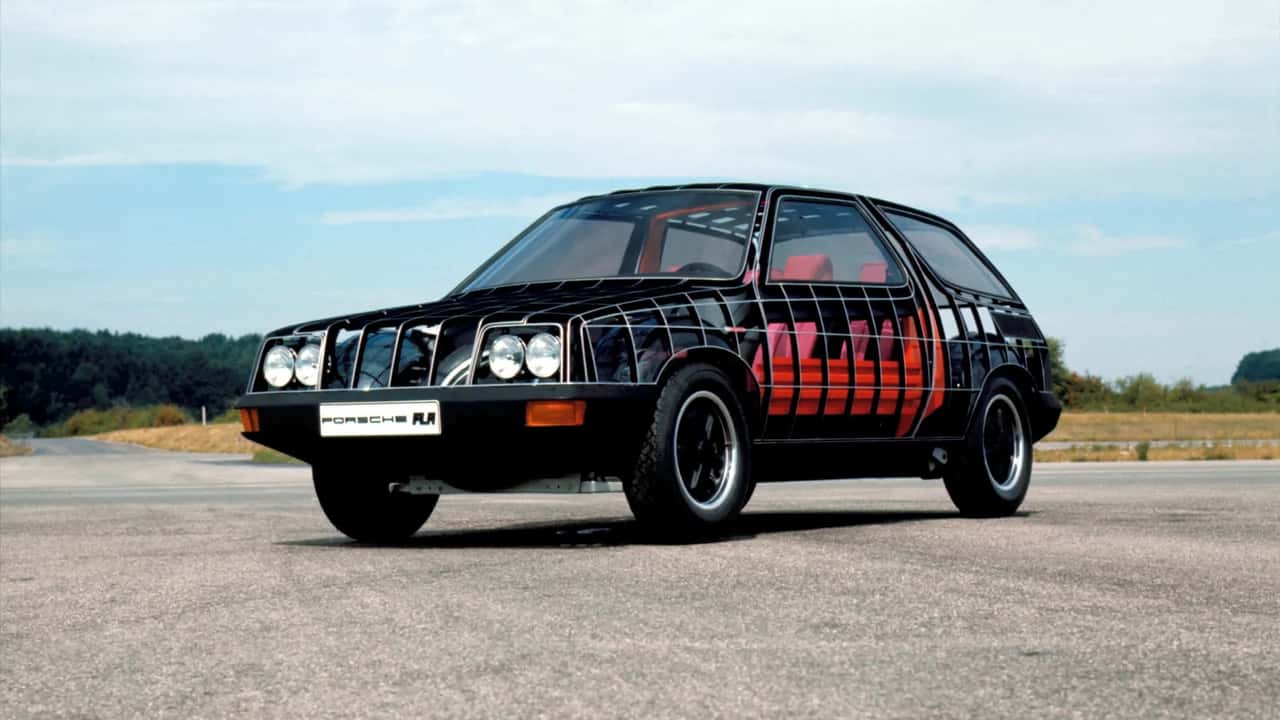
Cars eventually wear out, but Porsche was already exploring ways to make them last longer more than 50 years ago. The Porsche Museum recently reminded us of that unusual experiment on its official Instagram page, spotlighting the Forschungsprojekt Langzeitauto (FLA). Unveiled in 1973, the concept prioritized longevity over performance and even anticipated some features that eventually made it into production.
The project followed the Club of Rome's 1972 Limits to Growth study, which raised concerns about the planet's finite resources and the consequences of unchecked industrial expansion. Porsche took those warnings seriously enough to investigate how automakers could reduce their raw material consumption by building vehicles that wouldn't need replacing so often.
Commissioned by Germany's Federal Ministry for Research and Technology, the project resulted in a compact car designed to cover at least 186,000 miles (300,000 kilometers) over a 20-year lifespan. That was roughly twice the expected service life of a typical car at the time. Internally designated Type 1989, the FLA debuted at the 1973 Frankfurt Motor Show, though Porsche never intended to put it into production.
The FLA looked nothing like the sports cars that made Porsche famous. Its compact silhouette was closer to an ordinary family hatchback, bringing to mind the AMC Pacer and Lada Samara, although both cars arrived several years later. The exposed grid-like structure made it look more like an engineering experiment than a finished automobile. That was precisely the point: Porsche wanted visitors to see how the car was put together rather than admire its styling.
Source link