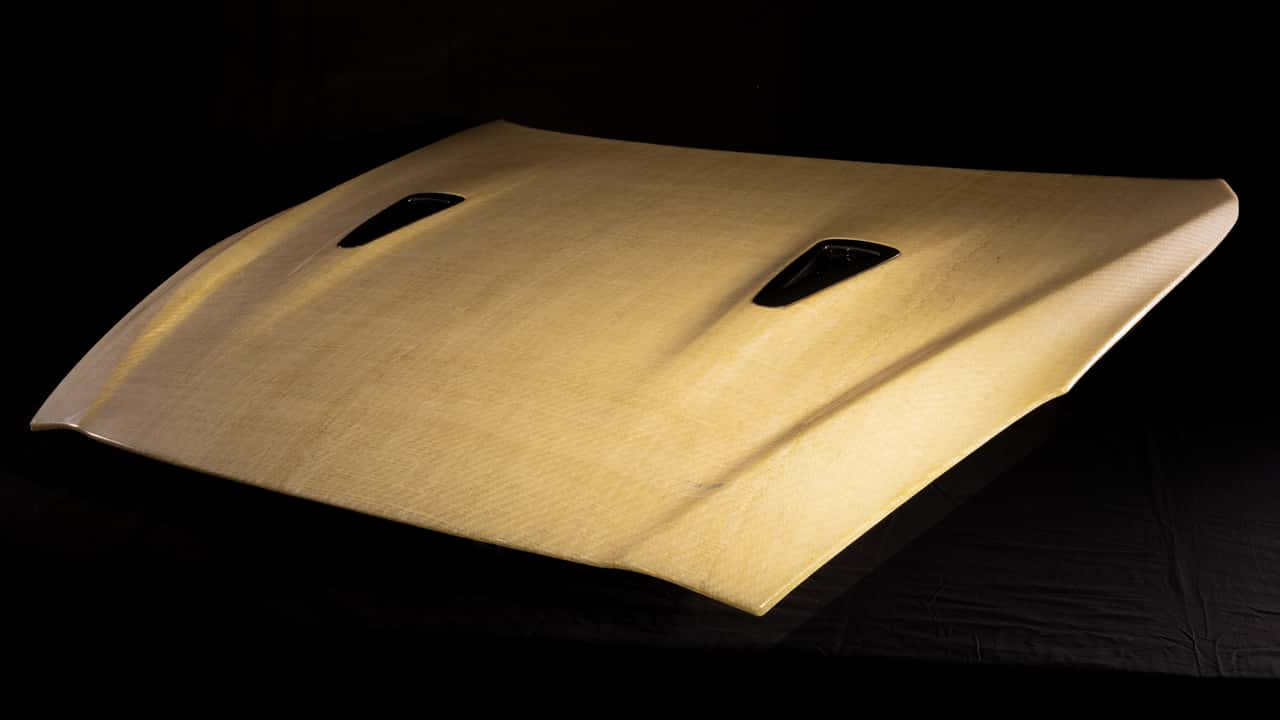
Nissan and a Japanese materials company, Food Reborn Co. Ltd., just found a second life for agricultural waste. The two firms jointly developed automotive exterior body panels made from natural fiber-reinforced plastic, using fibers pulled from discarded pineapple leaves.
Nissan announced the material on November 17, 2026, a day before it goes on public display. The Yokohama-based automaker says the panel is built for demanding environments, including motorsports, where sustainable composites are typically scarce and costly.
'We have developed a new fiber-reinforced composite material that utilizes pineapple leaves, a byproduct usually unutilized and discarded. This sustainable and composite material also delivers the high level of performance required for demanding environments such as motorsports.'
The panel pairs pineapple-leaf fiber with resin to form a natural fiber-reinforced plastic, the same broad category of material some racing series already require for modified exterior body panels. Supply of those composites, Nissan notes, has long been limited and expensive.
Nissan says the finished material offers higher tensile strength than conventional natural-fiber composites built on flax. BMW uses flax-based composites in motorsport and in the M Concept Neue Klasse, the design study that previews its first fully electric M car. Nissan hasn't released test data to let the comparison be checked independently.
Etsuko Uda, representative director and CEO of Food Reborn, built the project around what pineapple farming throws away. She said:
'Transforming agricultural byproducts like pineapple leaves into high-performance materials for automotive and sporting goods is highly significant.
Source link