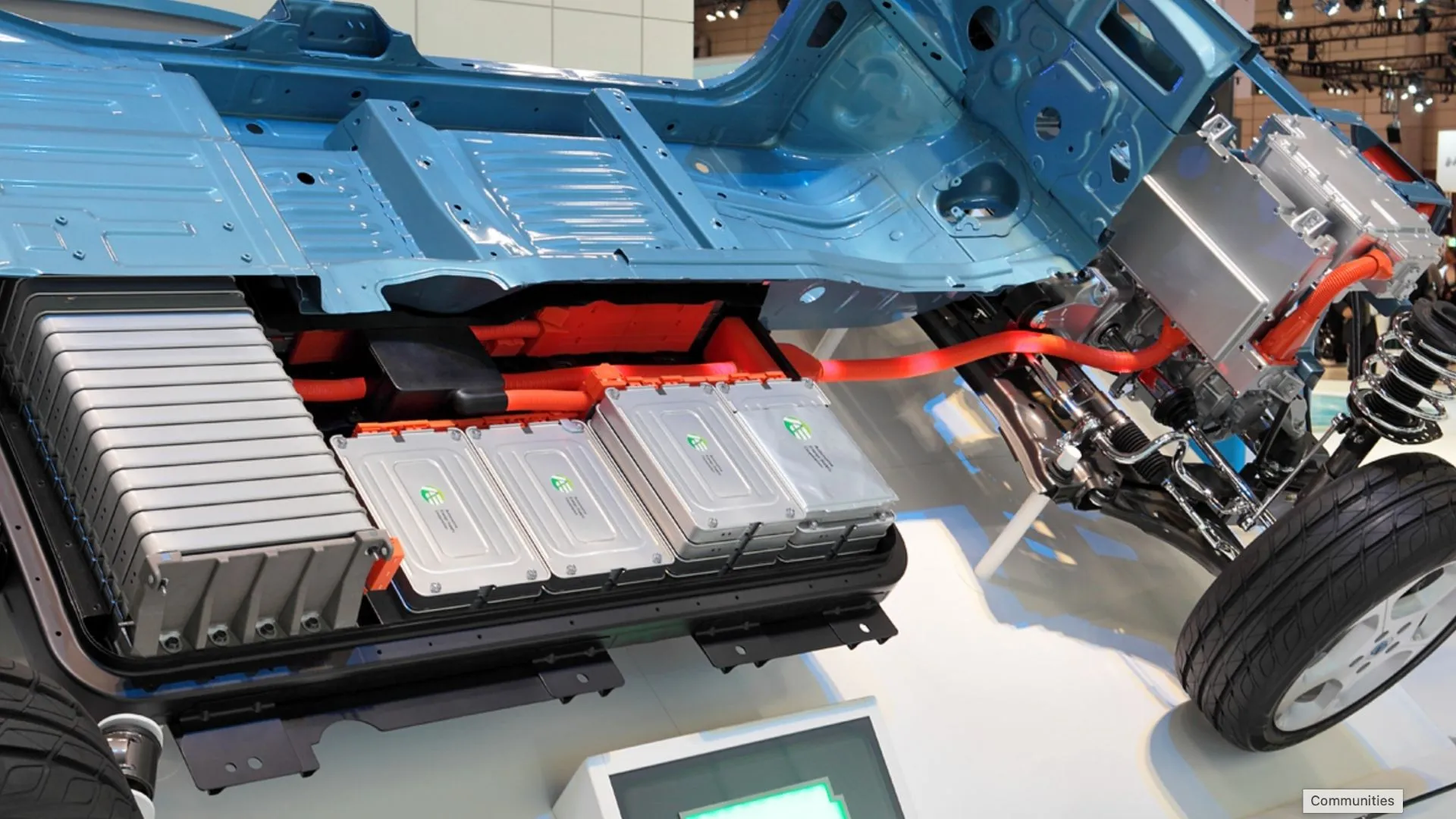
South Korean researchers have developed a nanoscale electrode design that could help make electric-vehicle batteries smaller and lighter while extending their operating life.
The technology uses semiconductor manufacturing techniques to address uneven lithium deposition, a major obstacle facing anode-free batteries.
Anode-free batteries could potentially increase the amount of energy stored within a given battery size.
However, their commercial development has been limited by unstable lithium deposits that reduce performance during repeated charging and discharging.
Standard lithium-ion batteries contain an anode material, typically graphite, that stores lithium while the battery charges. Anode-free designs remove this material and instead deposit lithium directly onto a thin copper current collector.
Eliminating graphite frees up space and reduces weight, potentially allowing manufacturers to build batteries with higher energy density. For electric vehicles, that could translate into lighter battery packs or greater driving range without increasing pack size.
The design also creates a difficult engineering problem. Lithium does not always spread evenly across flat copper foil. Instead, it can accumulate in particular areas and develop into sharp, branching structures called dendrites.
These formations destabilize the protective layer surrounding the lithium and encourage unwanted reactions with the electrolyte. Battery performance consequently declines rapidly over repeated cycles.
Earlier attempts to solve the problem have included adding surplus lithium or placing thick protective coatings on the electrode. Although these measures can offset lithium losses or shield its surface, they also increase battery weight and volume.
The KAIST-led team modified the copper foil itself using secondary sputtering lithography, or SSL, a precision fabrication method associated with semiconductor manufacturing.
Source link