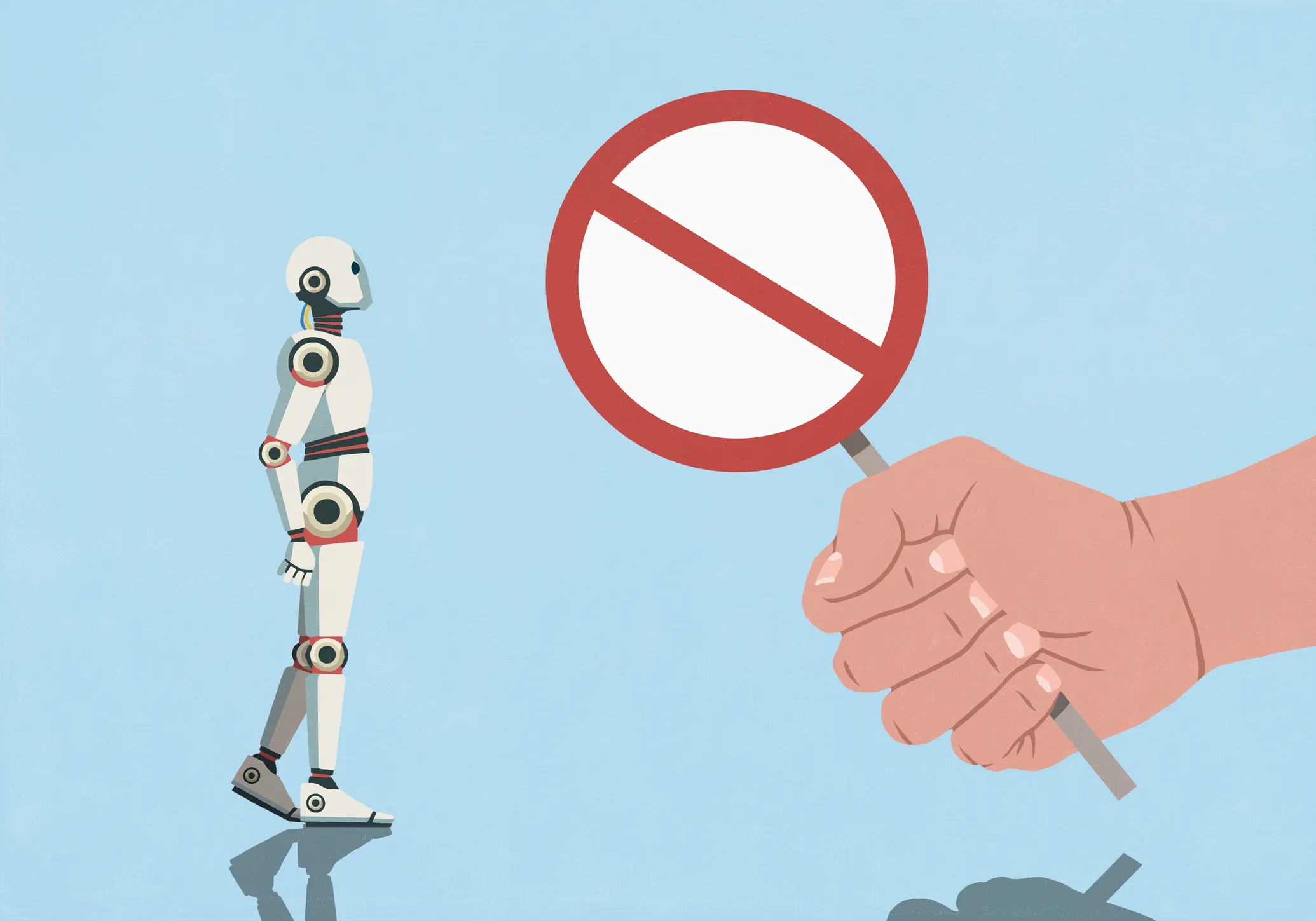
If there’s one lesson the OpenAI-Hugging Face incident taught us, it’s that AI agents can be unpredictable.
“Imagine if something like that happened in the physical world,” Howie Sun, CEO and co-founder of Laplace Intelligence, told TechCrunch. “AI agents are moving from computers into the real world, and we don’t really want physical AI to fail in the real world.”
Ann Arbor-based Laplace is building automated red-teaming — essentially, stress-testing a system by deliberately trying to make it fail — for robotics and physical AI. The company is betting that the only way to make sure physical AI is safe is to have AI test it.
“Our goal is to help companies discover and fix problems before deployment — and, over time, build a shared foundation of evidence that customers, insurers, and regulators can trust,” Sun said.
Laplace is one of 20 startups competing in Startup Battlefield 200, the startup pitch competition taking place at TechCrunch Disrupt in San Francisco this week, October 13-15. It will present on the Disrupt Stage Tuesday afternoon, October 13.
Sun, alongside his co-founder and chief scientist Henry Liu, founded Laplace a year ago out of the University of Michigan. Sun has spent the last eight years in academia researching how to challenge autonomous driving AI in simulation. In 2023, he and Liu — his then-PhD adviser — published a paper on the subject that made it onto the cover of the top scientific journal Nature. That’s when the calls started coming in from autonomous vehicle companies interested in implementing their ideas.
Source link
![BMW’s new iX1 looks like a baby iX3 [Images]](https://images.themorningpulse.fyi/uploads/2026/10/rss-mv70oeln-lkd3fp-meta.webp)