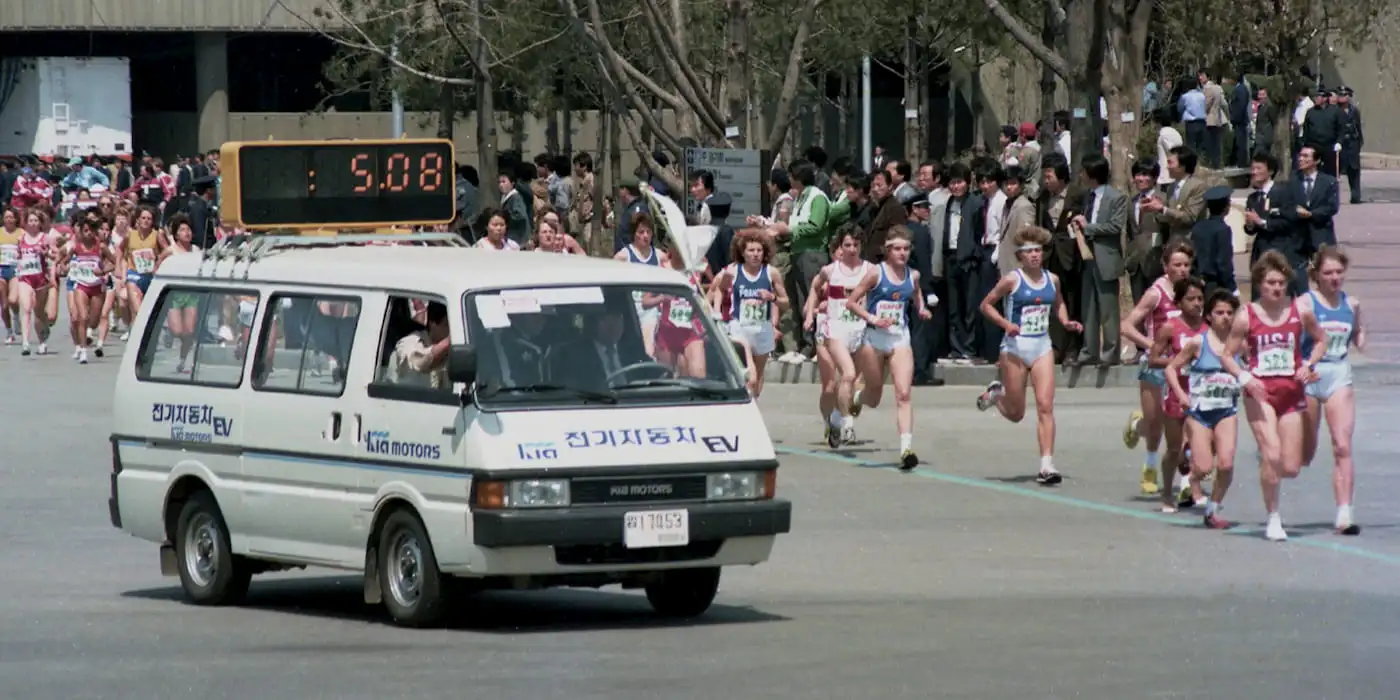
The Kia Besta EV hit the roads in 1986 as the brand’s first fully electric vehicle. 40 years later, Kia continues to “lead the pack” with a full lineup of EVs ranging from entry-level cars and SUVs to three-row models, and just about everything in between.
Kia wanted to design a new vehicle for the 1986 Asian Games, which were held in Seoul, South Korea, one that did not emit any toxic fumes in front of runners.
So, it created the Besta EV. The Besta van was initially developed 40 years ago by Kia’s Central Research Institute as the successor to the popular Bongo van, which is still sold in Korea and other markets today.
Unlike the Bongo, it was developed using Kia’s in-house tech rather than sourced from another automaker and rebadged as its own.
Kia swapped the 2.0L four-cylinder diesel engine for a 35 kWh battery and electric motor, which provided a range of more than 26 miles (42 km) on a single charge.
While the Besta EV was never actually sold to the public, it laid the groundwork and offered an early glimpse at Kia’s shift to electrification.
The first mass-produced Korean EV certified for commercial sale was the Kia Pride EV in 1993. In 2011, the Ray EV became Kia’s first series-production electric car.
Kia expanded its electrification ambitions to Europe and the UK in 2014 with the first-generation Soul EV, the beloved boxy, funky crossover that was discontinued after the 2025 model year.
The Korean automaker has come a long way since the Besta EV, with a full lineup of electric vehicles ranging from compact cars to mid-size and three-row SUVs, vans, and just about everything in between.
Source link