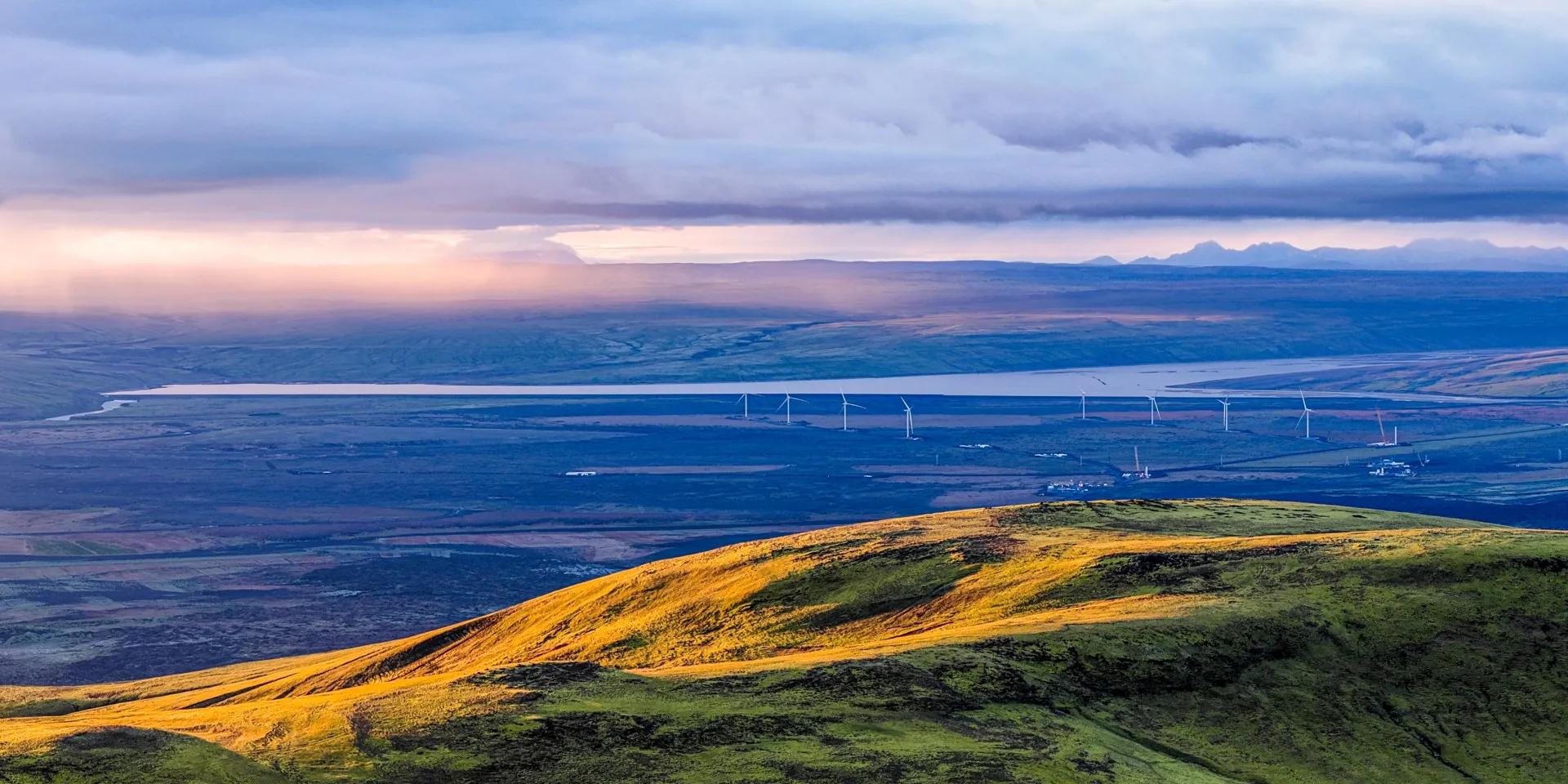
Iceland’s first utility-scale wind farm comes with a useful perk: When the wind picks up, its hydropower reservoirs can save water for later.
Vaðölduver Wind Farm plugs straight into the existing Búrfell hydropower infrastructure, sharing 220 kV transmission lines, substations, and access roads. And Iceland’s windiest months coincide with the time of year when less water flows into its reservoirs.
Landsvirkjun, Iceland’s national power company, officially commissioned Vaðölduver on September 15, 2026. The first 14 turbines are online; another 14 will be installed in a second phase, and the entire wind farm is expected to be operating by the end of 2027.
Once complete, Vaðölduver will have 120 megawatts (MW) of capacity. When I met with the folks at Landsvirkjun in Reykjavik last month, they told me that’s enough to power the equivalent of 90,000 Icelandic households. Vaðalda’s electricity feeds into the grid and is sold through power purchase agreements.
Vaðölduver sits on a lava-and-sand plain east of the Þjórsá River, south of Sultartangi Dam. Landsvirkjun already operates seven hydropower stations in the surrounding Þjórsá and Tungnaá region.
The wind farm was sited in this region of Iceland because the seasons line up nicely.
The winds are strongest in winter, when inflows into hydropower reservoirs can be low. In summer, wind speeds tend to drop, but glacial melt increases water availability for the hydropower system.
When the wind turbines are generating plenty of electricity, Landsvirkjun can ease off hydropower and leave more water in its reservoirs. When the wind drops, hydropower can pick up more of the demand.
Source link