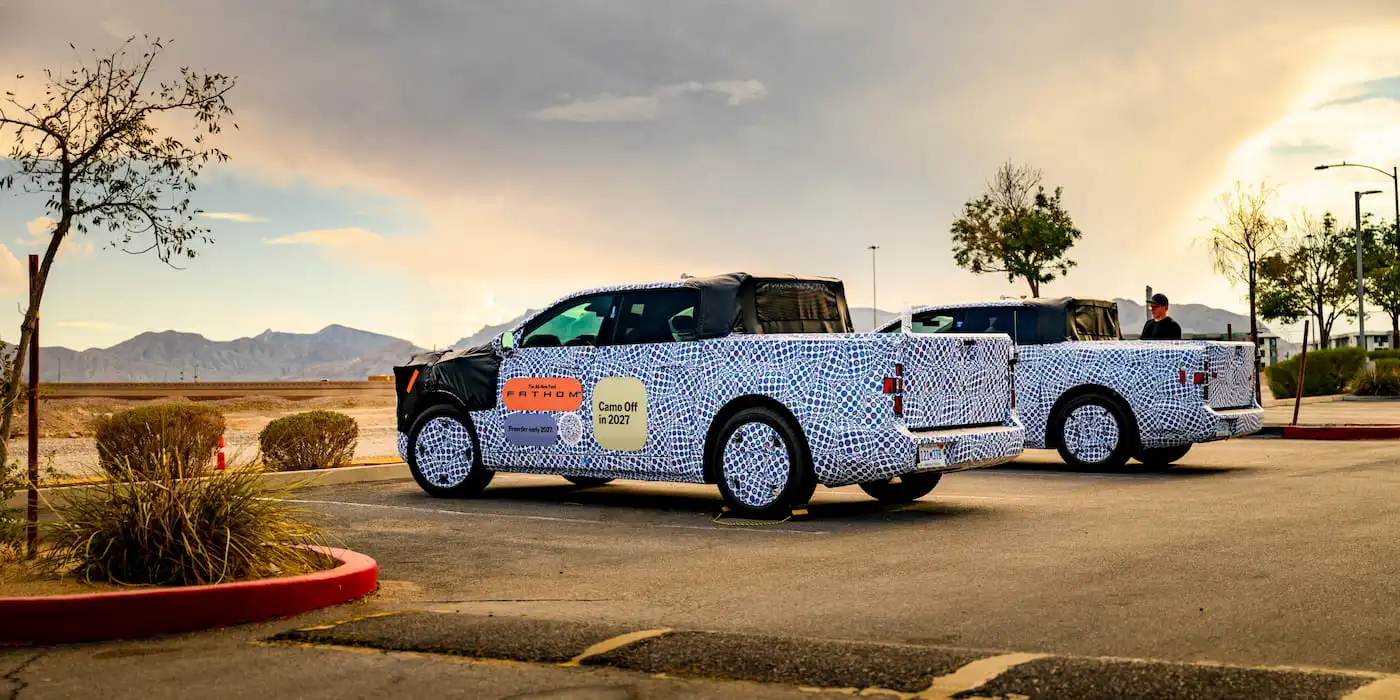
Ford has entered the battery business. The first LFP battery cells are now rolling off the assembly line at Ford’s BlueOval Battery Park plant in Michigan and are headed to power Fathom prototypes in Kentucky.
How do you get more out of a battery without adding weight or more cells? According to Alan Clarke, Ford’s vice president of advanced development projects, who is also leading its Universal Electric Vehicle (UEV) platform, the answer lies in lithium iron phosphate (LFP) technology.
Unlike traditional lithium-ion, LFP batteries use no nickel or cobalt, which helps reduce costs. They also typically hold up better after years of use and charging.
To make it a reality, Ford turned to CATL, the leading global EV battery manufacturer. Ford uses CATL’s licensed technology and manufacturing expertise at its BlueOval Battery Park Michigan plant.
Ford said it will be the first in the US to deliver LFP batteries for mainstream automotive use, with the battery cells now rolling off the line in Michigan.
The first LFP battery cells are headed to Ford’s Louisville Assembly Plant and will be used to power Fathom prototypes, its first vehicle based on the UEV platform.
Ford designed and engineered the Fathom from the ground up for efficiency. As such, it chose prismatic battery cells because they fit directly into the chassis, reducing structural costs.
With cells now being delivered from a plant that it owns and operates, Ford said it will use the knowledge gained in Michigan to support more affordable EVs and Ford Energy, its new battery energy storage business in Kentucky.
Source link