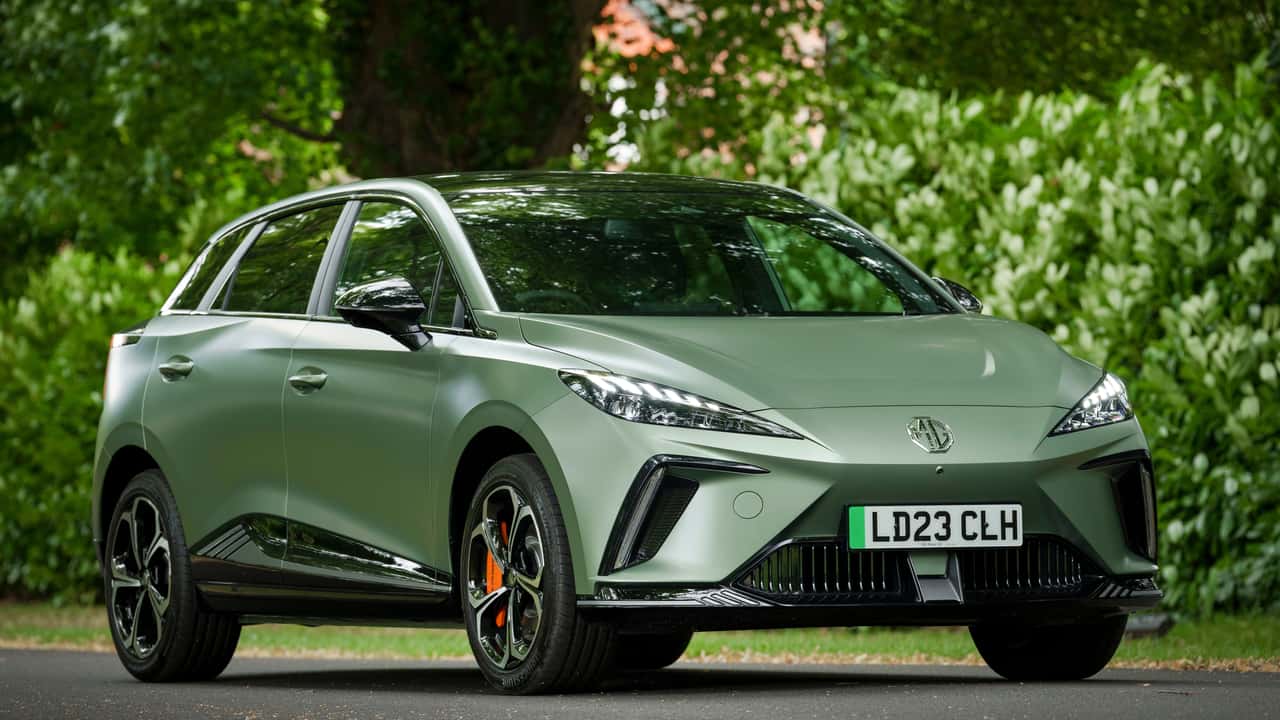
The MG4 has been one of Europe's most talked-about affordable EVs since it arrived. Still, its first appearance in Germany's most closely watched reliability study won't make the marketing brochure. In the latest TÜV Report, the little electric hatchback from SAIC-owned MG finished 108th out of 109 models in the 2- to 3-year-old category.
The results were analyzed by ADAC, Germany's largest automobile club, whose full name is Allgemeiner Deutscher Automobil-Club, or "General German Automobile Club." The report is based on roughly 9.7 million mandatory inspections (known as the HU in Germany) carried out between July 2025 and June 2026. It covers 200 models, 26 of them fully electric. The MG4 was one of them, and it failed with "significant" or "dangerous" defects 16 percent of the time.
According to ADAC, which summarized the findings, the MG4's weak spot is its brake discs. That's a familiar problem for EVs. Regenerative braking means the friction brakes do less of the work so that the discs can corrode from underuse. Add the extra weight of a battery pack, and brakes and suspension become common trouble spots for electric cars at inspection time. Lighting defects are also frequent, according to ADAC.
But ADAC also points out that the big gaps between models show it isn't just about the powertrain. How the components are designed and how long they last clearly matters.
The ill-fated Mazda MX-30 is the best electric car in the study, with a defect rate of just three percent, which was good for third place overall.
Source link