
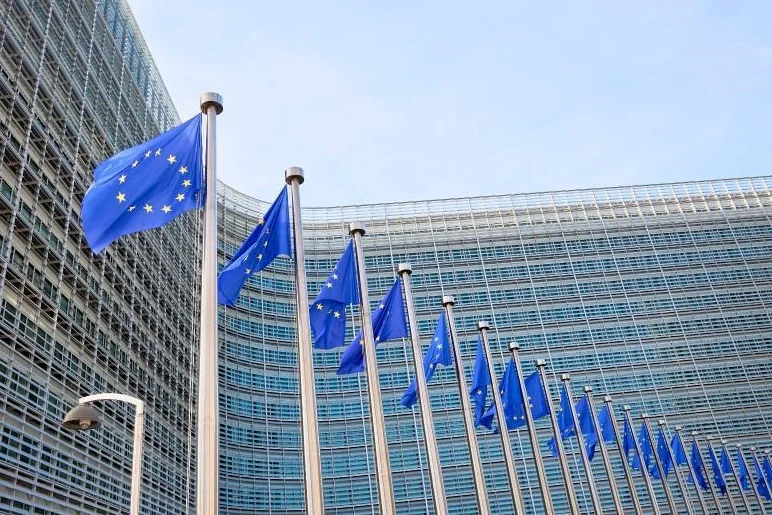
The EU Commission has selected 46 additional strategic raw material projects across 16 member states. Many of these involve lithium, nickel, cobalt, manganese, and graphite, which are particularly critical for the battery industry. This time, Germany is well-represented with eight projects selected in total.
From a pool of 102 applications, the European Commission has selected 46 new projects to benefit from accelerated permitting procedures and improved access to financing.
The projects span 16 member states and cover the entire raw materials value chain. Eight focus on extraction, eleven on processing, and 19 on recycling. Additionally, there are eight integrated projects: three combine extraction and processing, while five combine processing and recycling. In total, 15 of the 17 strategic raw materials under the Critical Raw Materials Act (CRMA) are addressed.
For the battery industry, seven projects relate to lithium, twelve to nickel, ten to cobalt, five to manganese, and four to graphite. Other projects target rare earth elements for permanent magnets, as well as magnesium and tungsten.
Germany is particularly well represented in the second selection round (link in German). There, eight projects have been granted strategic EU project status – more than in any other member state. These include lithium extraction and processing projects in Saxony and Saxony-Anhalt, as well as recycling projects for copper, lithium, and batteries in North Rhine-Westphalia. There are also recycling projects for permanent magnets in Baden-Württemberg and a titanium processing project in Hesse.
Four of Germany’s eight projects are in the recycling sector. This selection also highlights the role of the circular economy in securing Europe’s raw material supply.
Source link
![Autonomous military 6×6 packs electric drive and go-anywhere grit [video]](https://images.themorningpulse.fyi/uploads/2026/10/rss-mv58csf3-q8jwap-meta.webp)