
A study by Chalmers University of Technology examines reconfigurable battery packs that can selectively bypass weaker cells. Under optimal conditions, this could extend the lifespan of batteries in certain high-voltage vehicles by more than 20 per cent.
Battery packs in EVs consist of numerous interconnected cells that do not age at the same rate. In conventional architectures, a particularly weak cell can therefore limit the usable capacity and lifespan of the entire pack.
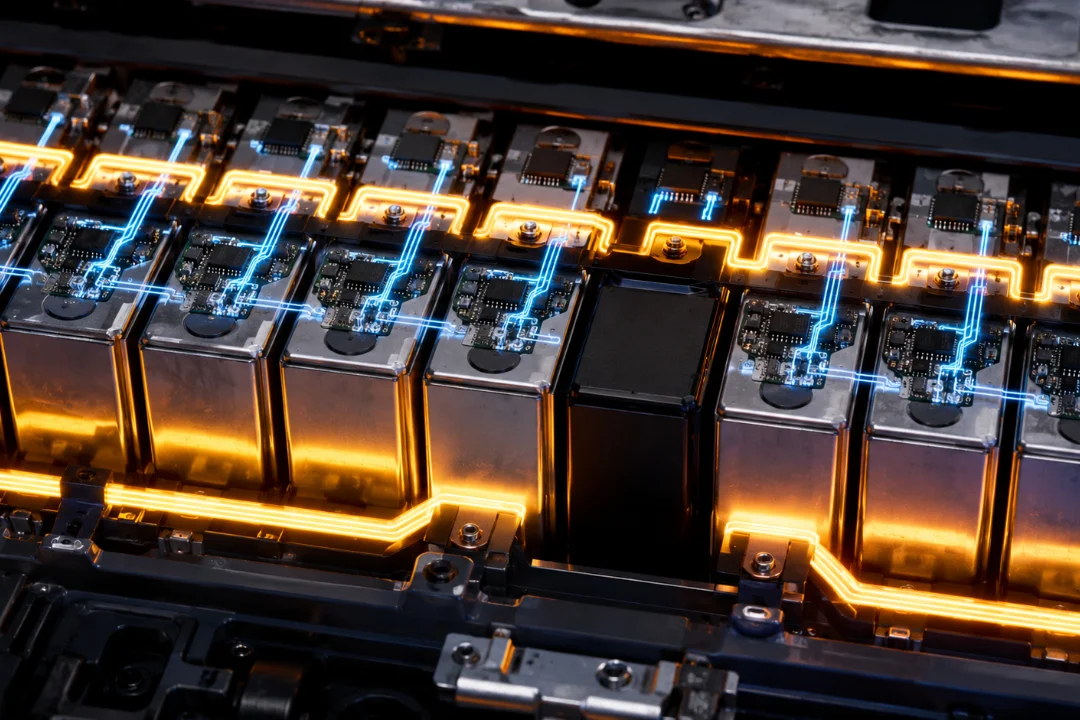
This is precisely where a new study by researchers from Chalmers University of Technology comes in. It examines so-called reconfigurable battery packs, in which switches and control systems can alter the wiring of individual cells or cell groups. Weaker cells can thus be selectively bypassed while the remaining capacity continues to be used.
In the most advanced case, where each cell can be controlled individually, simulations show that the lifespan of certain high-voltage vehicles can be extended by more than 20 per cent. According to the study, the potential is particularly significant for electric trucks and long-range electric cars with many cells connected in series.
To illustrate the scale of the effect, the researchers use an example with an 80-kWh battery and an annual mileage of 12,000 km. If a conventional battery pack is replaced after ten years, the reconfigurable pack reaches the same ageing state in the model only after around eleven years – about 14 months later.
Additionally, the residual value is higher because the pack has aged less. Although the technology requires additional electronics and thus incurs higher initial costs, the study suggests that the longer service life and higher residual value can offset these additional costs under realistic conditions.
Source link