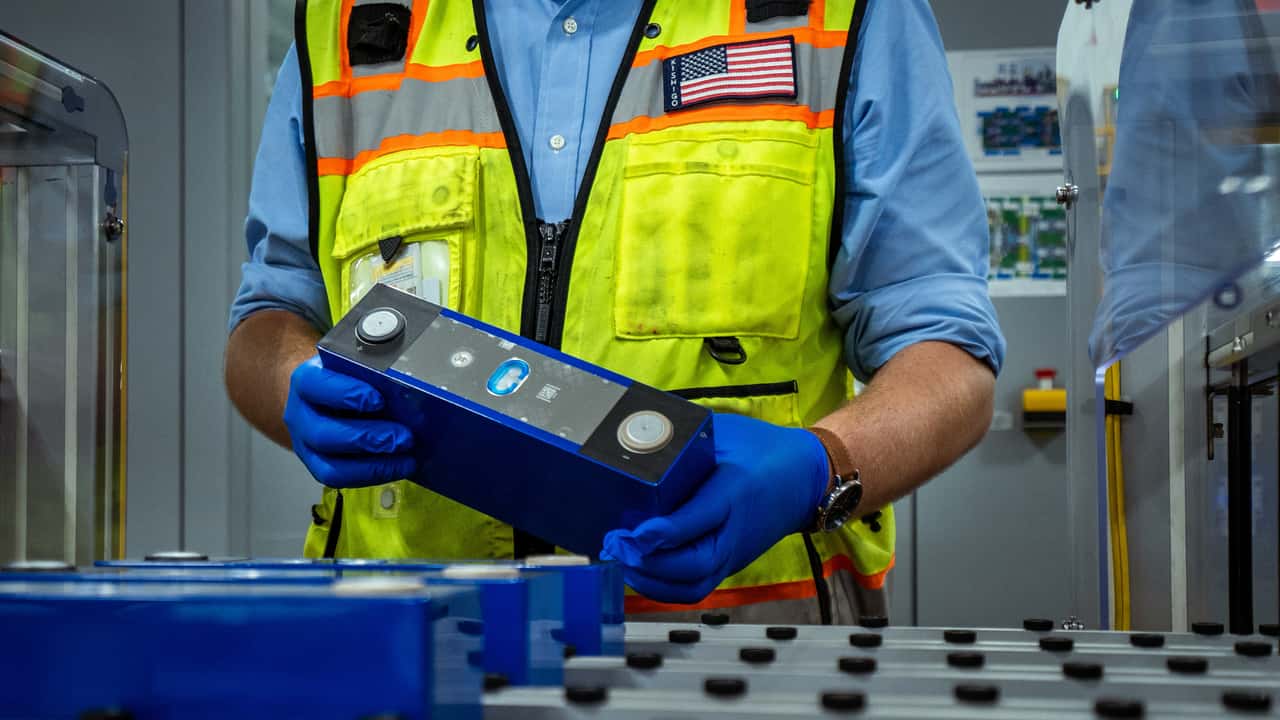
In a small corner between two conference rooms at the 2-million-square feet BlueOval Battery Park Michigan, Ford brought the upcoming Fathom electric truck’s battery pack for journalists to look at.
The Fathom will get something that’s rare in the U.S. but common on high-tech EVs in China: low-cost lithium-iron-phosphate (LFP) cells in a prismatic form factor. That combination is a key enabler of the Fathom's $29,495 starting price, and Ford said it does more than just cut costs.
Charles Poon, the vice president of vehicle hardware engineering at Ford, said the prismatic LFP cells will allow the Fathom to be low-cost and fun-to-drive.
“Those two are what enable us to deliver an affordable structure for the vehicle,” Poon said during a media roundtable at BlueOval Battery Park Michigan last week. It allowed Ford to “take out a lot of components from the vehicle and still be able to be a very fun driving very stiff vehicle,” he said.
Most EVs in the U.S. use cylindrical nickel-manganese-cobalt (NMC) cells. It's a well-established chemistry and form factor, known for the high energy density that gives EVs long driving range.
Chinese LFP technology, however, has narrowed the gap to NMC in energy density and performance in recent years, while keeping a cost advantage because it forgoes expensive raw materials like nickel and cobalt. That combination is why Chinese EVs offer impressive range and fast charging at affordable prices.
The cells made at BlueOval Battery Park Michigan use technology licensed from CATL, the world's largest battery maker.
Source link