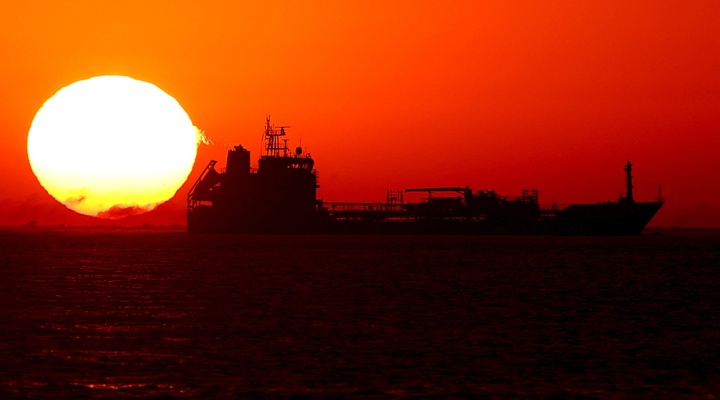
When the oil supertanker Esteem Explorer sails from the United States to Japan in late November, loaded with about 2 million barrels of crude, the journey will cost US$81 million. The same journey would have cost US$9.1 million last year, on average.
The shipping cost translates into US$40.50 per barrel, about nine times last year’s rate. While oil’s soaring selling price worries consumers, the Esteem Explorer’s expensive voyage illustrates how transport costs are further inflating the price. Refiners process oil into fuel to move food, retail goods and construction materials, and rising costs are stoking inflation in countries that depend on imports.
Every US$10-per-barrel increase in shipping costs adds about 23 cents per gallon to gasoline, said Kenneth Medlock, a fellow in energy and resource economics at the Houston-based Baker Institute for Public Policy. On that basis, the Esteem Explorer’s shipping cost works out to at least 80 cents more per gallon of gasoline than last year, according to Reuters calculations.
“It’s sort of like a slow-moving train. It doesn’t all happen instantly … but the longer this drags on, the more sticky it becomes, which means you get more of a sustained impact at the grocery store, in the convenience store, at the mall,” Medlock said. “Everything gets more expensive because that’s how we move stuff around.”
Freight rates account for more than 40 per cent of the price of US oil, based on Wednesday’s price around US$95 per barrel, compared with 7 per cent on average in 2025, according to LSEG shipping and oil price data.
Source link