Jenny Lai still hears the same requests from international brands that want to come to China. “Can you open a Tmall store for us? How many physical stores can you open? When can you launch this channel?”
Lai, president and CEO of Bluebell Group for Greater China, has a short answer. “I think that’s the wrong way to approach the market.”
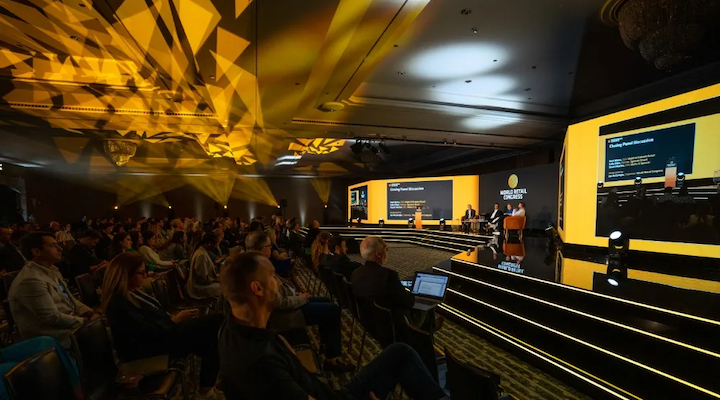
Her view, shared during a panel on brand partnerships at World Retail Lab in Hong Kong in mid-October, runs against the strategy that served foreign labels in China for the better part of three decades. When the market was expanding every year, getting products into shopping malls and onto Tmall, Alibaba’s platform for official brand storefronts, was most of the work.
“For 20 or 30 years, China was seen as this magical market that was constantly growing and booming,” she said. “Investment was flowing in, and international brands were expanding rapidly.”
That period is over. Lai described the overall trend in China as soft, with some sectors still growing while others shrink. Alongside her on stage were Wesley Chu, president of Asia Pacific at Authentic Brands Group, and Alessandro Tomio, MD of Lacoste for Hong Kong and South Asia Pacific. Between them, the three executives represent the main routes by which a Western brand gets built in Asia.
Authentic Brands Group owns brands but does not run them. The New York-based company holds the intellectual property for more than 50 labels, including Reebok, Champion, Brooks Brothers and Nautica, and grants partners the right to operate them, market by market and category by category.
Source link