The trend emerging over the past year is only showing signs of getting bigger.
Over the last year, approach shoes have become a new wrinkle in the gorpcore cycle.
Fleeces and shells are now well past their precipice in men’s and women’s wear, but outdoor gear has had more staying power in footwear, particularly through trail runners but also to a lesser extent with hiking boots and sneakers. Approach shoes offer some of the same benefits as those categories — durability, grip and often varying levels of water resistance — as well as a distinct look driven by their very specific purpose.
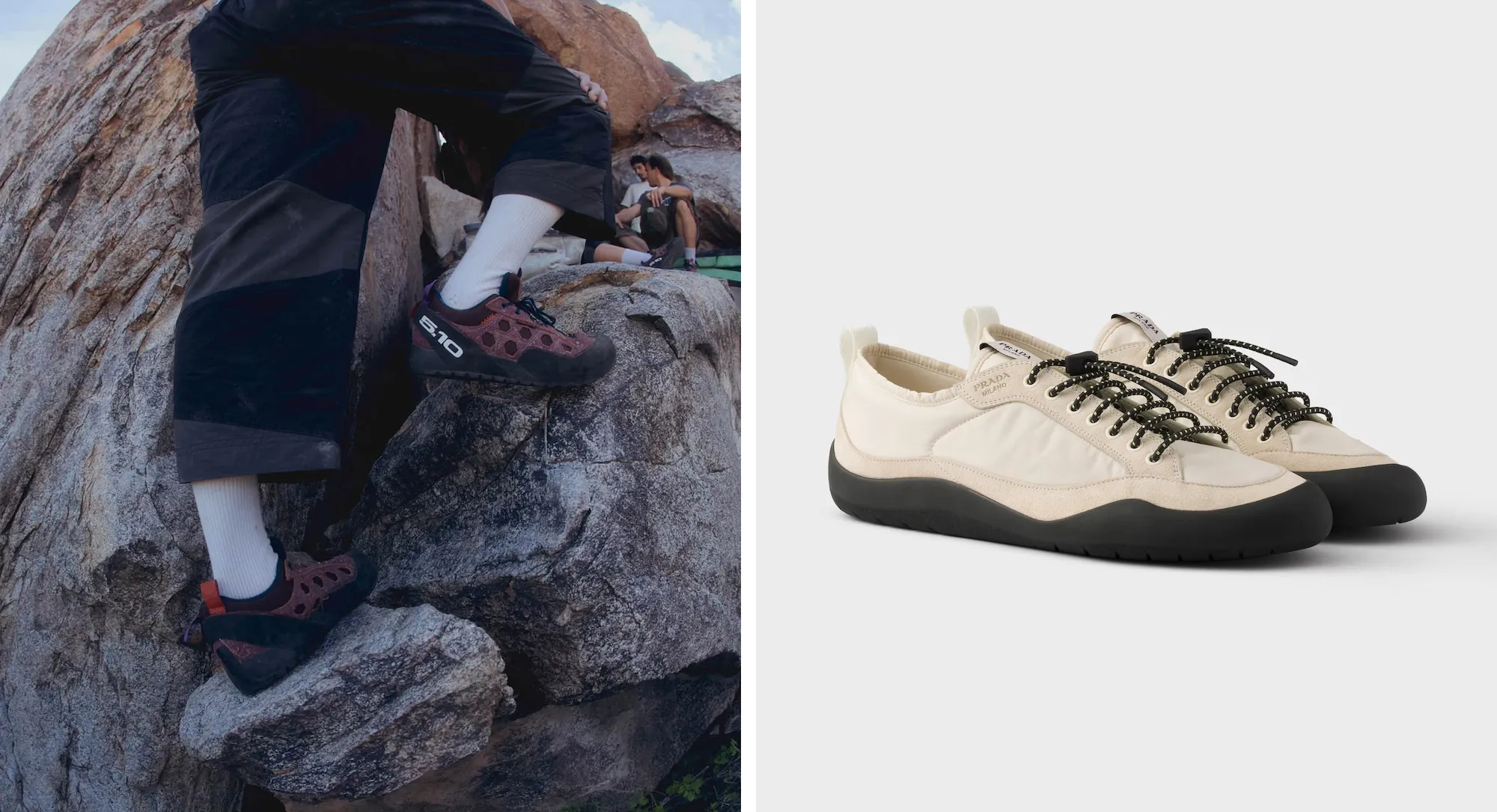
From a visual standpoint, the standout feature of an approach shoe is the rubberized toe tip, also called a rand, that almost always seems to be rendered in black. Its function is to provide grip in lower-difficulty rock climbing, as well as to protect the toes on the path leading up to a climbing route, hence the word “approach.”
You’ll also see a similar element on out-and-out climbing shoes, but because those fit much narrower and can sometimes even force the toes to point downward, you’re never going to want to wear a purely technical climbing shoe for anything except its stated purpose.
By contrast, with approach shoes, the versatility allows them to work for a hike and to be easily adopted into everyday life.
Ideal weather conditions will render many of the features superfluous for anything other than style points, but bring in rain, sleet or snow and a lugged outsole and water resistance become just as useful on a city street as a rock-packed incline.
Source link