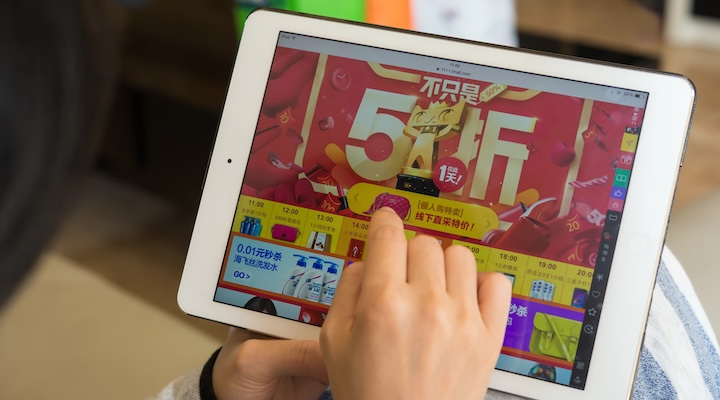
Taobao and Tmall have started the Double 11 shopping event and customers noticed.
The cross-store vouchers that once sent people padding their baskets to reach “spend RMB300, save RMB50” are gone from Alibaba’s headline mechanics. In their place is an “official instant discount” taken off each item at checkout, with no threshold to hit.
Alibaba is using the festival it created in 2009 to test whether cleaner prices, AI-led shopping and a tighter grip on its highest-spending members can restart a marketplace that barely grew in its most recent quarter.
Outside China, the same app is being sold in a different way. Taobao launched Double 11 simultaneously in 20 overseas markets, fronted by actor Zhang Linghe, with a pitch built on distinctive Chinese brands rather than low prices.
The event is still enormous. Beijing-based data firm Syntun estimates that Double 11 sales across Chinese online platforms reached RMB1.695 trillion (about $361.9 billion at the time) last year, up 14.2 per cent, over a window running from 7 October to 11 November.
“It’s the largest shopping festival in the world,” said Jacob Cooke, co-founder and CEO of WPIC Marketing + Technologies, which helps international brands sell on Chinese and Asian marketplaces.
Tmall opened presales on 15 October and runs in-stock sales until 13 November. It says a record 1 million brands and 72 million products are taking part, including 60,000 merchants joining Double 11 for the first time.
The retreat from threshold coupons has been under way for more than a year.
Source link