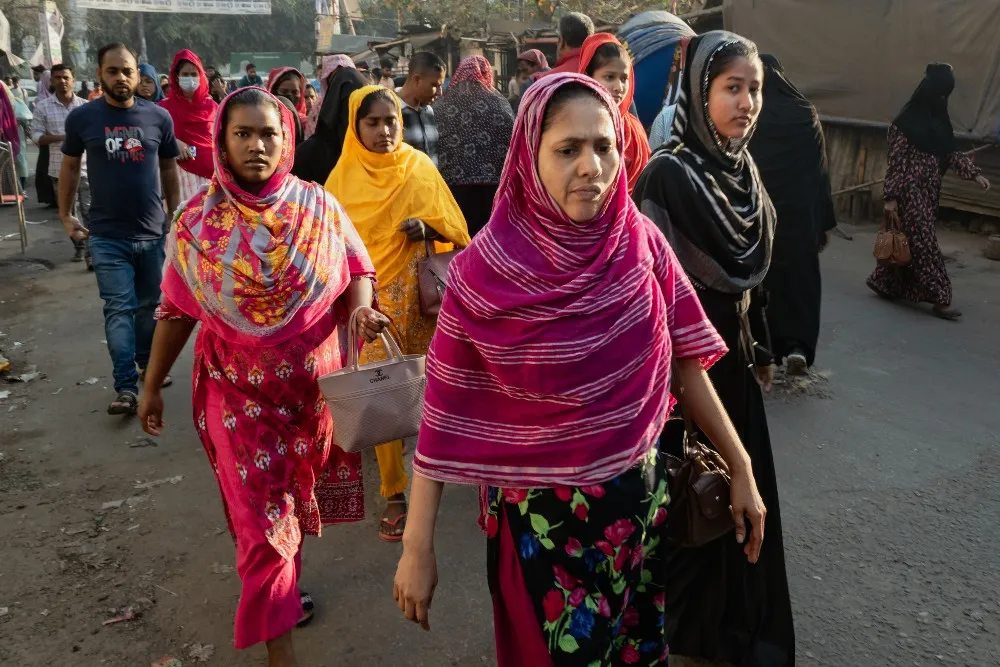
Since August 2026, garment workers in Bangladesh are protesting for a minimum wage of Tk 30,000 ($241.15) a month, more than double the Tk 12,500 ($100.48) floor in place since December 2023. Protests intensified in late October, and the government formed a new Minimum Wage Board on Nov. 1. The wage board’s meeting scheduled for Nov. 16 was postponed until Nov. 23.
The international brands or retailers that buy these garments have said remarkably little; Sourcing Journal contacted nearly 30 buyers and only a few responded with general statements about collective bargaining or monitoring developments.
Related Stories

How Fashion Is Getting Heat Stress Wrong
A Bangladeshi Union Leader Spoke Out Against Worker Arrests. Then She Was Taken Away by Police.
In 2024, governments, employers and workers meeting at the International Labor Organization (ILO) defined living wage as a pay sufficient for a decent standard of living for workers and their families, taking account of local circumstances and normal working hours. On the other hand, a minimum wage is a legal floor, not necessarily a measure of what a family needs to live decently. The Global Living Wage Coalition puts the 2025 living wage for Dhaka City at Tk 30,459 ($244.84) a month. The current legal minimum for garment workers is about 41 percent of that amount.
Buyers comply with local law when their suppliers pay the statutory minimum. But what responsibility do buyers have when that minimum falls far below the living wage? Do they have responsibility to pay purchasing prices which would allow suppliers to pay more?
Source link