On the Line is a weekly roundup of sourcing and labor quick hits in the apparel and footwear industry, from worker protests to boardroom maneuvering, tracking the developments shaping conditions on the factory floor and beyond.
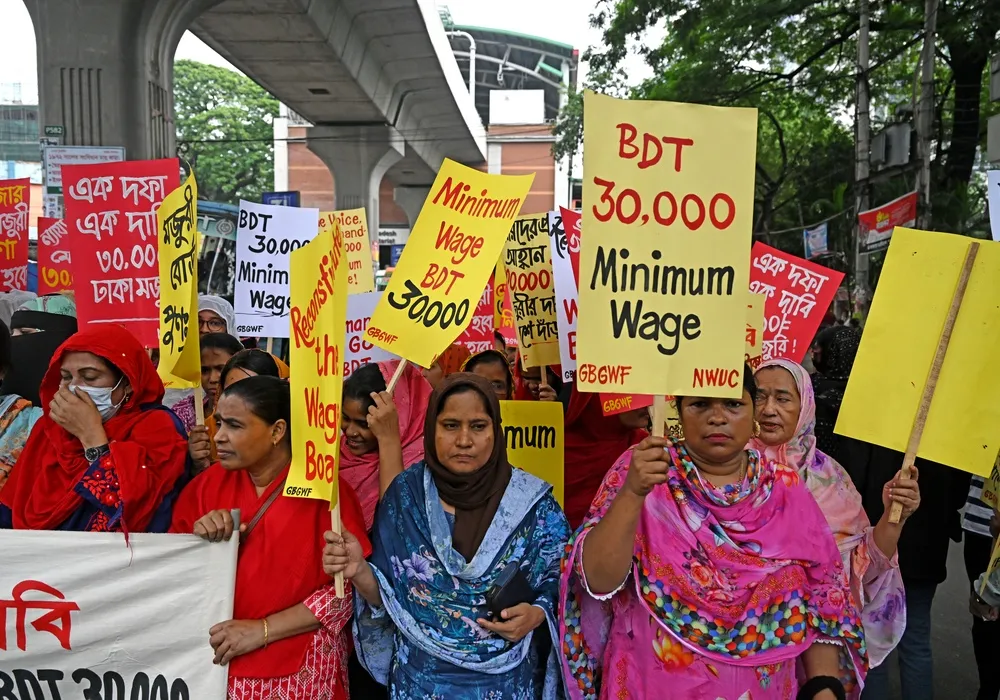
The Bangladeshi government will soon form a wage board to determine a new minimum wage for garment workers, labor and employment secretary Md. Abdur Rahman Tarafder said last week, countering a push by manufacturers to delay the next mandatory review until 2028.
Related Stories

Bangladesh Railway Starts Planning an Integrated Rail Network for Chattogram Port
300 Signatories Later, is the International Accord Facing a Deepening Divide?
Noting that nominations for worker and employer representatives are underway, Tarafder expressed hope that a gazette notification could be published by the end of October, after which the board would begin negotiations. He also said the board would consider Bangladesh’s overall economic situation, wage rates in neighboring countries and conditions in factories when setting the new floor pay.
The country’s current monthly minimum wage of 12,500 Bangladeshi taka ($101) was set in November 2023 following a wave of mass, frequently violent protests, during which workers and labor groups called for a basic wage of 23,000 taka ($186) amid rising inflation.
Similar disruptions have spread steadily across Bangladesh ’s industrial zones since August, driven by sudden factory shutdowns, widespread layoffs and employers’ failure to pay wages and other dues. Last week, at least 50 people, including 19 police personnel, were injured after police used tear gas, water cannons and batons to disperse garment workers demanding unpaid wages and higher pay in Dhaka’s Uttara area.
Source link