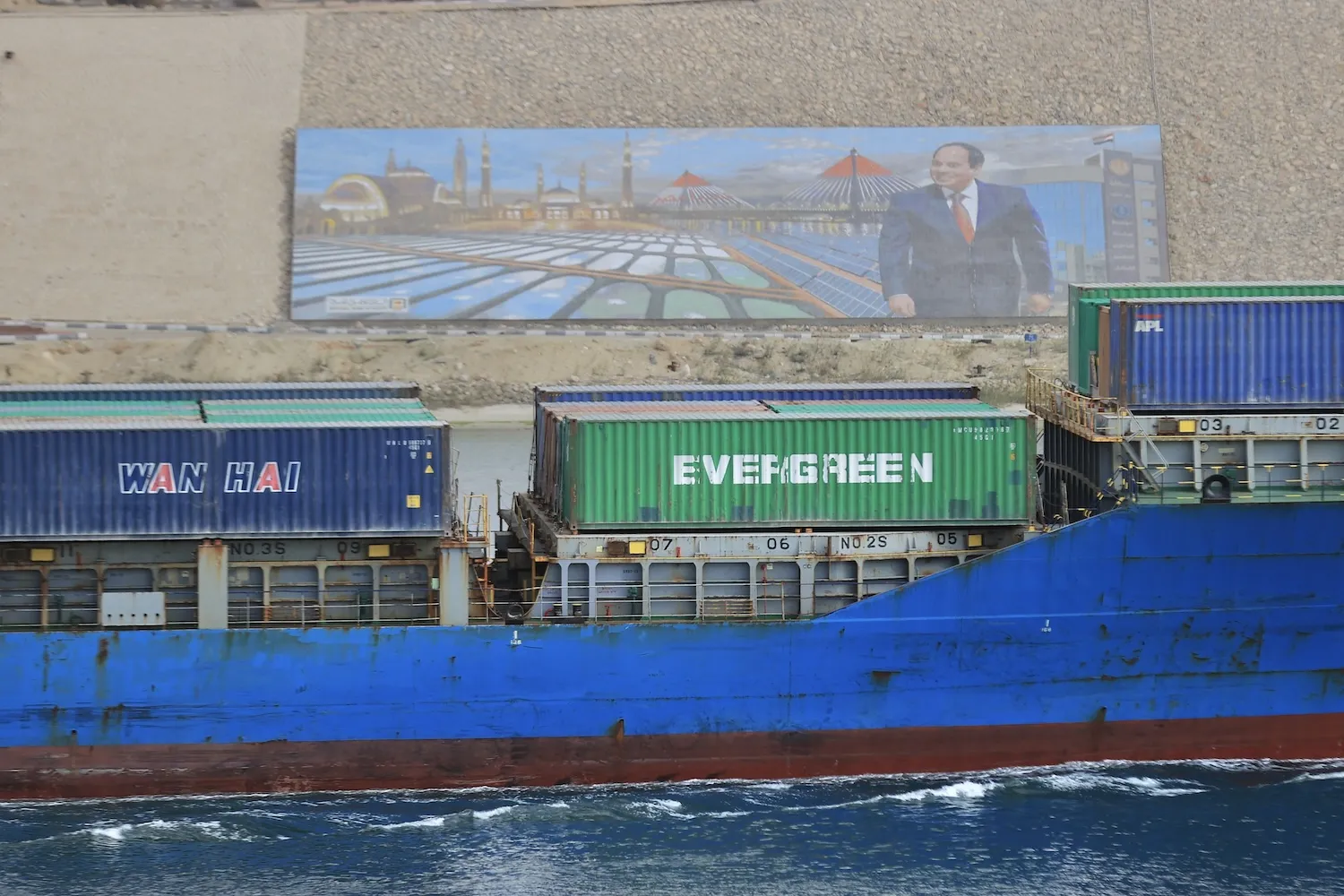
It’s going to take more than a wide return of vessels to the Suez Canal to normalize the congestion experienced at ports around the globe, says DHL Global Forwarding.
“Carriers must reposition ships, rebalance schedules and manage services operating across different routings. Ports and inland transport networks then need to absorb those changing arrival patterns,” said Bjoern Schoon, senior vice president of ocean freight, DHL Global Forwarding Asia Pacific. “The return to the Suez Canal can shorten the sailing. It cannot eliminate the bottlenecks waiting at either end.”
Related Stories

CMA CGM and Hapag-Lloyd Cash In on High Freight Rates
Red Sea Return Shifts More Container Congestion to European Ports
About 60 percent of relevant Asia-Europe head haul services are now planned through the Suez Canal, “with significant differences between Asia-North Europe and Asia-Mediterranean services,” the logistics giant said in a market update on Monday.
Citing data from container shipping market intelligence firm Linerlytica, broader network adjustments could take another six to 12 months, assuming security conditions do not force carriers to change course again.
Linerlytica estimates that the return of vessels to the Suez Canal route has already released over 500,000 20-foot equivalent units (TEUs) of global vessel capacity since June. Despite the return, more than 10 percent of the global container fleet, or about 3.6 million TEUs, remains tied up in port congestion, the company says.
“The rapid influx of new capacity to both the Arabian Sea and Red Sea ports continues to overwhelm the ports in both regions, as the total capacity waiting at anchorages across the Middle East and Indian subcontinent rises to a record high of over 500,000 TEUs,” Linerlytica said in a Monday market update.
Source link