More than a decade ago, cattleman Paul Martin sought investment to expand his beef operation in Queensland when a conversation with Saudi investors took an unexpected turn. Why was Australia culling thousands of camels each year, when the animal is so revered in different cultures for its meat, dairy and ability to carry people and goods across harsh terrain? “They were just mortified,” Martin explained.
So Martin decided to change track, and today runs Summer Land Camels, a business that turns camel milk into a range of premium consumer products. The farm occupies 850 acres at Harrisville, nestled in Queensland’s Scenic Rim with a herd of around 500 animals.
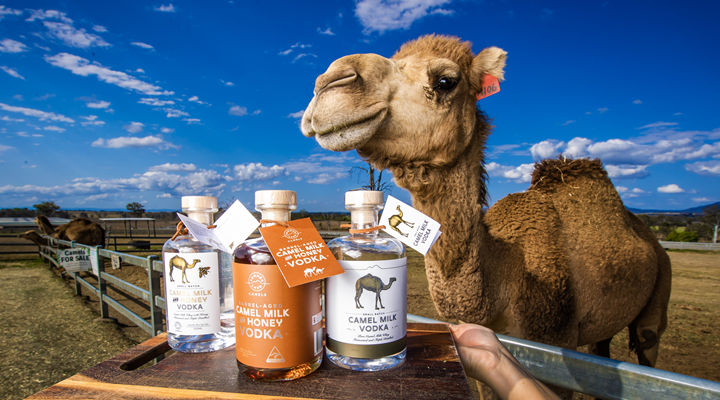
Visitors can ride a camel, then shop for its contributions to the household. There’s drinking milk, of course, plus milk powder, Persian feta-style marinated cheese, fresh fromage blanc, gelato, and skincare. Even the whey left over from cheesemaking has a second life, in vodka and rum. Harris Farm Markets lists its milk in one-litre bottles and selected pharmacies and health-food stores stock its skincare.
Martin’s interest in camels, however, predated the conversation with the Saudi investors. Years earlier, he had begun questioning what other species could complement cattle on Australian farmland. Camels browsed differently, reaching into trees and eating prickly invasive plants, while also returning nutrients to the soil through their manure. “I was fairly comfortable handling the animal,” he explained.
The Saudi conversation opened his eyes to another opportunity: camel dairy. Camel milk could become food, an ingredient in skincare and the basis of further products, giving Martin several markets through which to pursue his ambition of establishing camels as accepted Australian livestock.
Source link