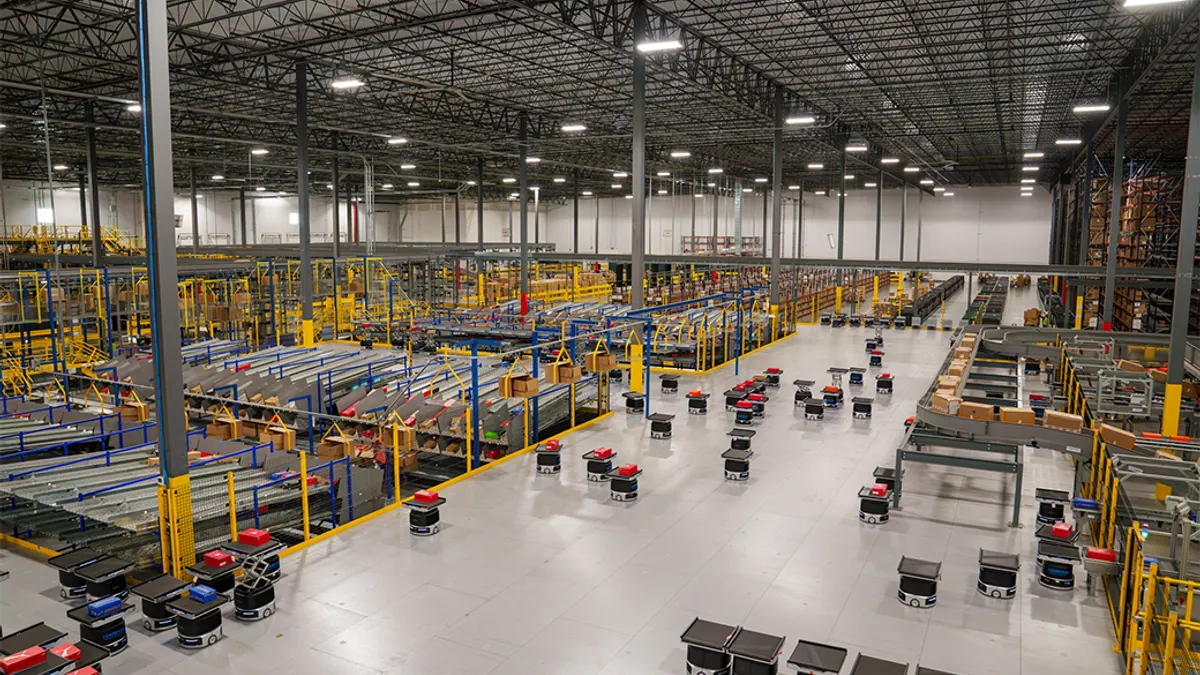
Large, highly automated distribution and fulfillment centers are making headlines as retailers invest in new ways to expand capacity and move products more efficiently. For retailers and brands evaluating their own operations, the goal should not be to automate as much as possible. It should be to determine what level of automation can solve the right operational problems at a sustainable cost.
That answer varies by operation. Order profiles, SKU characteristics, service requirements, labor availability and demand fluctuations all influence which technologies will be effective. Retailers must also decide whether to invest in and manage automation internally or access those capabilities through a third-party logistics provider.
The optimal level of warehouse automation is the simplest combination of processes, systems and technology that can reliably meet service requirements at a sustainable cost while adapting to changes in volume and order mix.
Start by identifying the broader operational challenge the business needs to address. Common constraints include rising labor costs, limited workforce availability, order accuracy, insufficient throughput, space limitations, inventory visibility and the ability to scale during peak periods or periods of rapid growth.
Next, evaluate how those challenges affect the operation as a whole. An automation solution that increases picking capacity, for example, may create limited value if packing or shipping cannot support the additional volume. Likewise, technology designed to reduce labor requirements may not deliver the expected return if demand is too variable to keep it consistently utilized.
Before selecting a solution, evaluate the complete fulfillment flow. Key factors include:
Source link