At the COP31 Health Pavilion in the Turkish city of Antalya on Saturday, Laurie Parsons, a reader in human geography at Royal Holloway, University of London, offered what he said was a provocation: Despite the uptick in conversations about heat and human labor, “we’re still getting it all wrong.”
This was Parsons’s second time at the annual United Nations climate summit. At his first, COP26 in Glasgow in 2021, the United Kingdom’s Met Office had warned that 1 billion people would face extreme heat stress if global temperatures rose by 2 degrees Celsius above pre-industrial levels. Five years later, a 2-degree warming limit—never mind the 1.5-degree hard stop that the Paris Agreement pursued—sounds almost quaint. The “lowest possible” overshoot scenario for peak warming by roughly mid-century, the UN Environment Programme warned last month, now sits at 1.7 degrees—but only if the world slashes emissions by 18 percent by the end of the decade, 45 percent by 2035 and 69 percent five years later, compared with 2025 levels. If current policies continue, however, warming could surpass 2.8 degrees Celsius within the century.
Related Stories

Bangladesh on Edge: Defusing the Tinderbox
On the Line: What's Going on in Bangladesh?
For the 2.4 billion workers the International Labour Organization estimates are exposed to excessive heat each year, including the one-third who experience physiological heat strain or heat-related illness as a result, this is far from comforting news.
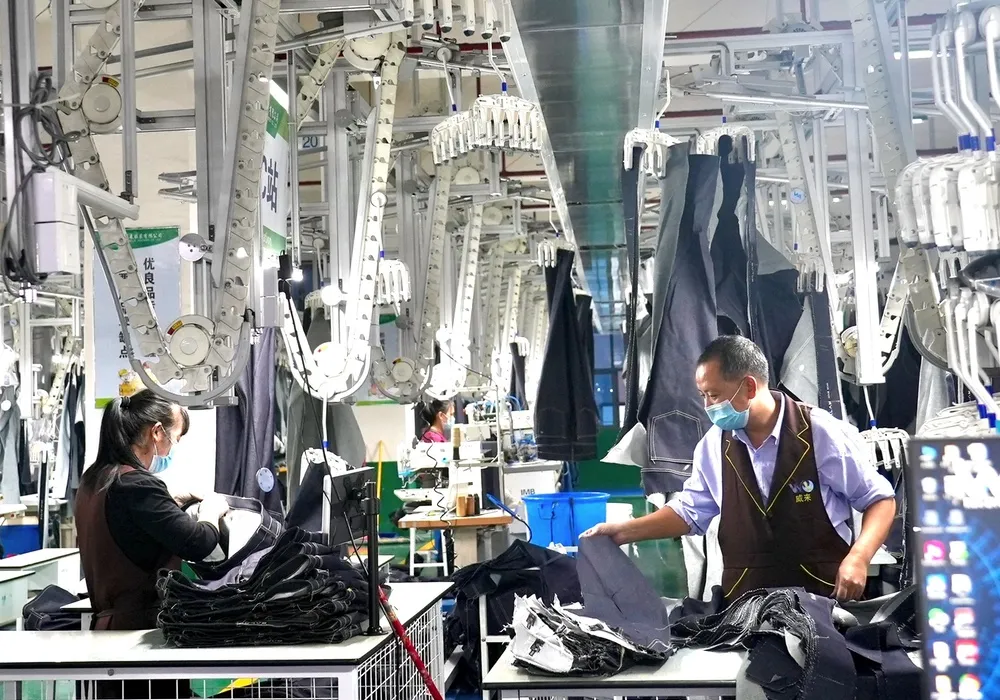
But statistics aside—and Parsons, as principal investigator of the Oppressive Heat project, can continue to rattle them off—he contends that while organizations in the fashion industry have been grappling with the issue as a matter of space, heat is “fundamentally a problem of labor” that traditional metrics fail to adequately measure.
Source link