Ask founders who have stayed away from quick commerce, and most of them will tell you the same thing: it is a cash furnace. Platforms take steep commissions, discounts never seem to end, and ad budgets disappear before a brand understands what sells.
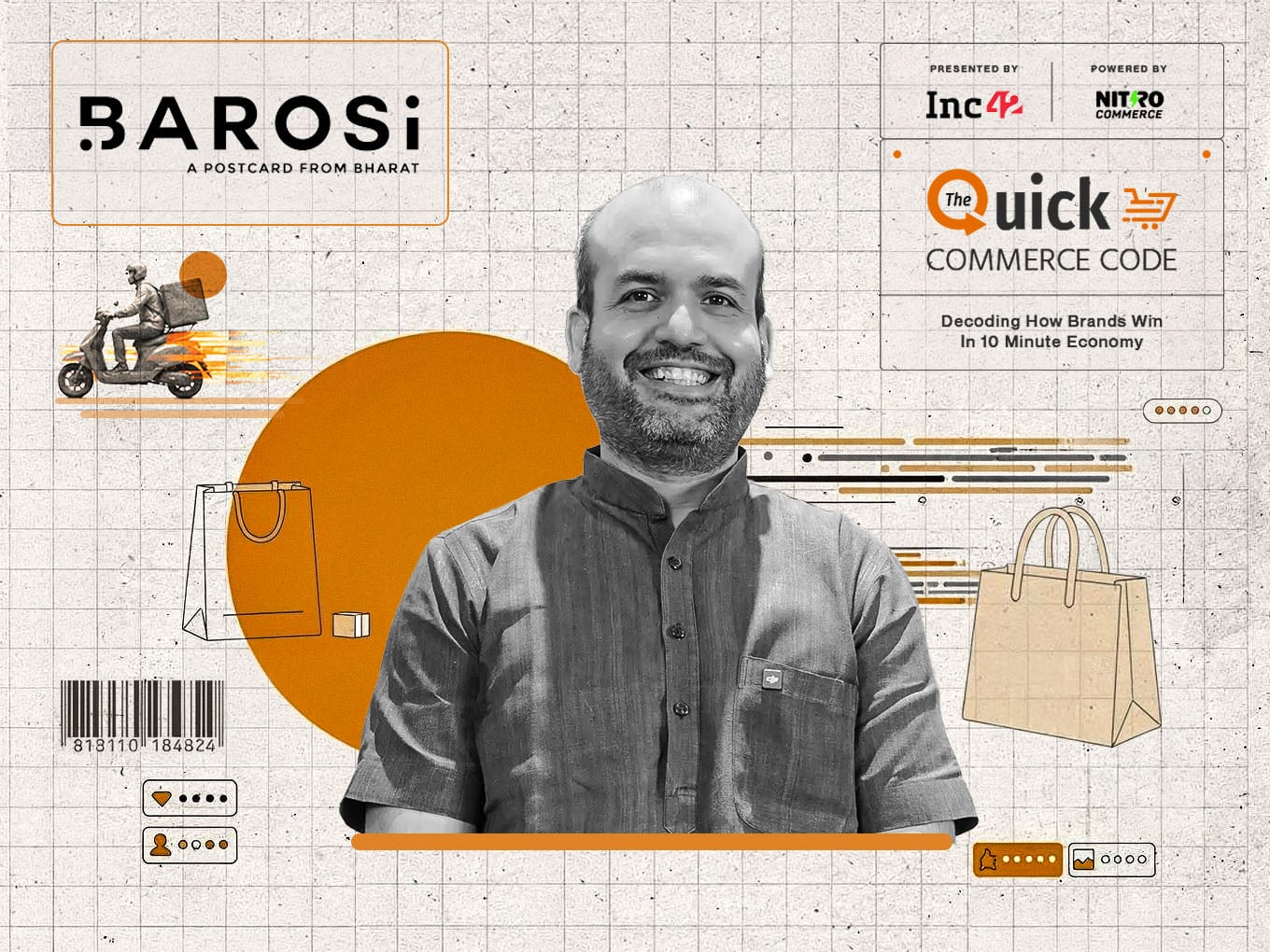
For a bootstrapped brand, these challenges alone ought to be reason enough to steer clear. But Durlabh Rawat, founder of Delhi NCR-based premium ghee brand Barosi, chose to dip his toe into the unforgiving waters of quick commerce in late 2022 with ghee, a product abundantly available in a market dominated by established FMCG giants.
Add to that the challenge of aggressive discounting. Also, with platforms taking at least a quarter of every sale from newer brands, breaking into quick commerce was no easy feat for a bootstrapped brand like Barosi.
Four years on, Barosi, named after the traditional earthen hearth, is listed on 98% of Blinkit’s dark stores and sells across six rapid-delivery platforms. It closed FY26 with a revenue of ₹56 Cr and is now doing an annualised revenue run rate of ₹180 Cr.
So, how did a bootstrapped dairy brand carve out a space for itself in quick commerce, despite stiff competition from deep-pocketed FMCG giants, limited dark-store shelf space and relentless pricing pressure?
In an exclusive conversation for The Quick Commerce Code by Inc42 and Nitro Commerce, Rawat explained how Barosi endured quick commerce’s challenges and shared the dos and don’ts for brands looking to crack the channel.
Rawat grew up in a modest household in a small village in Uttar Pradesh, where two cows and a goat tied in the backyard were as much a part of everyday life as the fields surrounding his home.
Source link