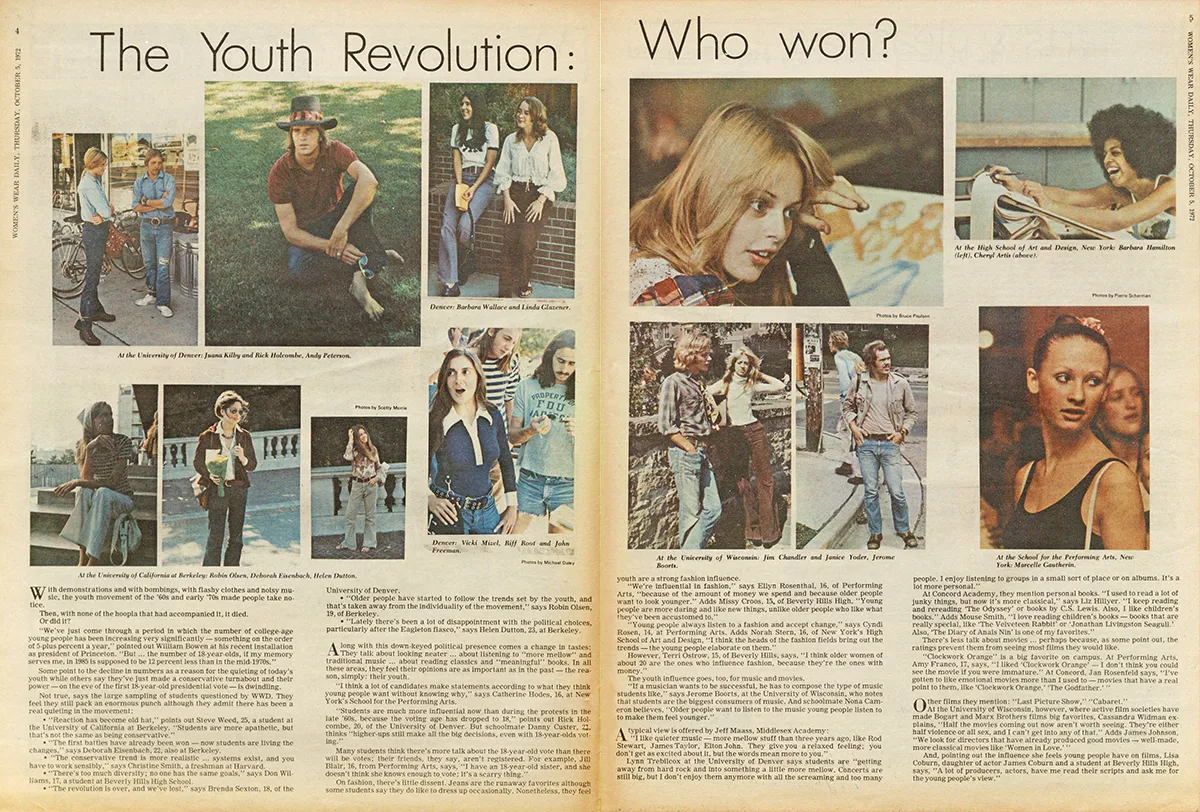
Recent student-led demonstrations across Europe and North America recall the historic sit-ins and boycotts of the 1960s and early 1970s that demanded institutional and social change.
For decades, demonstrations and protests , including those led by students, have served as catalysts for institutional change, both politically and socially. Today’s momentum, from the voice of Gen Z erupting in cities across Europe and North America , is no different. In fact, these protests in numbers and context recall the historic student-led sit-ins and boycotts of the 1960s and early 1970s that garnered widespread attention.
As time passed and the 1970s got underway, change was evident — particularly in the voting age, which shifted from 20 to 18. On the eve of the first presidential election in which 18-year-olds could vote, Women’s Wear Daily sought the opinions of young Baby Boomers, high school and college students, ranging in age from 18 to 25 for its article “The Youth Revolution: Who Won?” Their views were validated, but the question remained: Had youth activism produced lasting institutional change, or had it only reshaped conversations about culture, style and public discourse?
Ice Breakers With Diplo: His Fastest Mile, Dream Running Companion and Why He Doesn’t Use Headphones
Megan Thee Stallion Cozies Up in Feather Boa & Sheer Bedazzled Dress for Victoria’s Secret Fashion Show 2026 Pink Carpet
Olivia Colman Tries Her Hand at Modeling in Sleek Leather Formalwear on Miu Miu’s Spring 2027 Runway
CEO Talks: How Gucci Westman and David Neville Are Building a Luxury Beauty Brand for the Ages
Source link