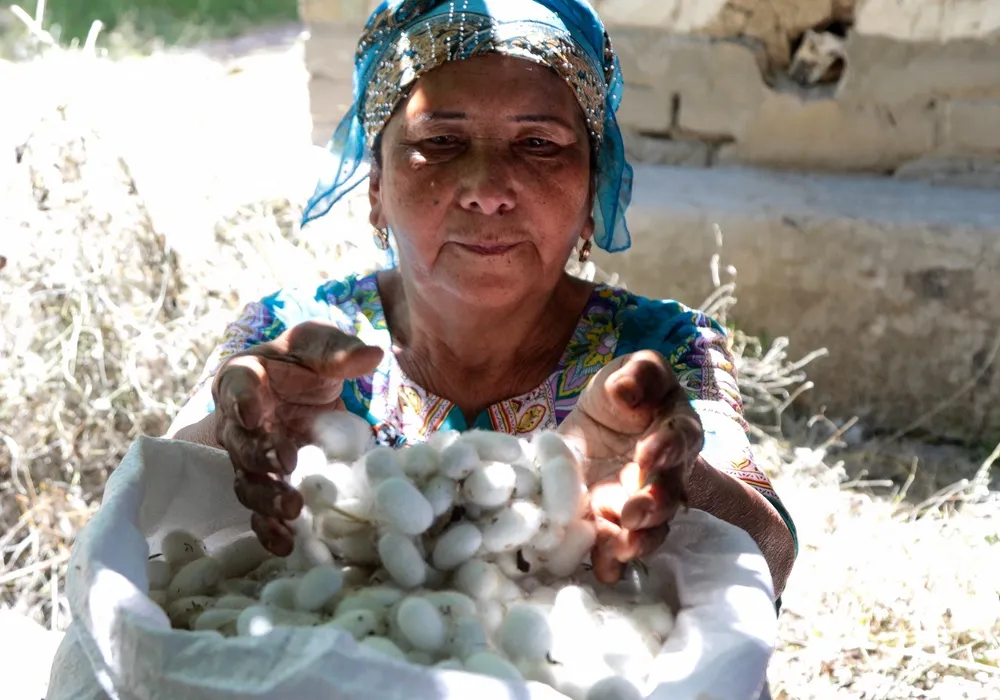
More than a decade after the Uzbek Forum for Human Rights first warned of forced labor in Uzbekistan’s silk sector, cotton and wheat farmers otherwise uninvolved in sericulture are still being compelled under threats of land seizure, water cutoffs, fines and physical violence to provide a steady supply of silkworm cocoons for the benefit of private companies, the organization said.
Efforts in recent years to end state-imposed forced labor and child labor in the Central Asian nation’s cotton fields notwithstanding, there has been little momentum to do the same for silk despite similar patterns of quotas and coercion, according to a new report published Thursday.
Related Stories

A Bangladeshi Union Leader Spoke Out Against Worker Arrests. Then She Was Taken Away by Police.
Will Fashion Brands Back Higher Wages in Bangladesh?
“The cocoon and silk sector was overshadowed by this bigger problem of forced labor of cotton pickers, which was always the focus of our work,” said Umida Niyazova, founder and director of the Uzbek Forum for Human Rights. “Nothing has changed because nobody has been talking about it.”
But the implications for the broader industry could be significant. Uzbek silk enters global supply chains at multiple stages as raw silk, silk yarn, silk fabric, finished goods and silk waste. S. Tariff Act. S. Department of Labor’s forced labor goods list.
Source link