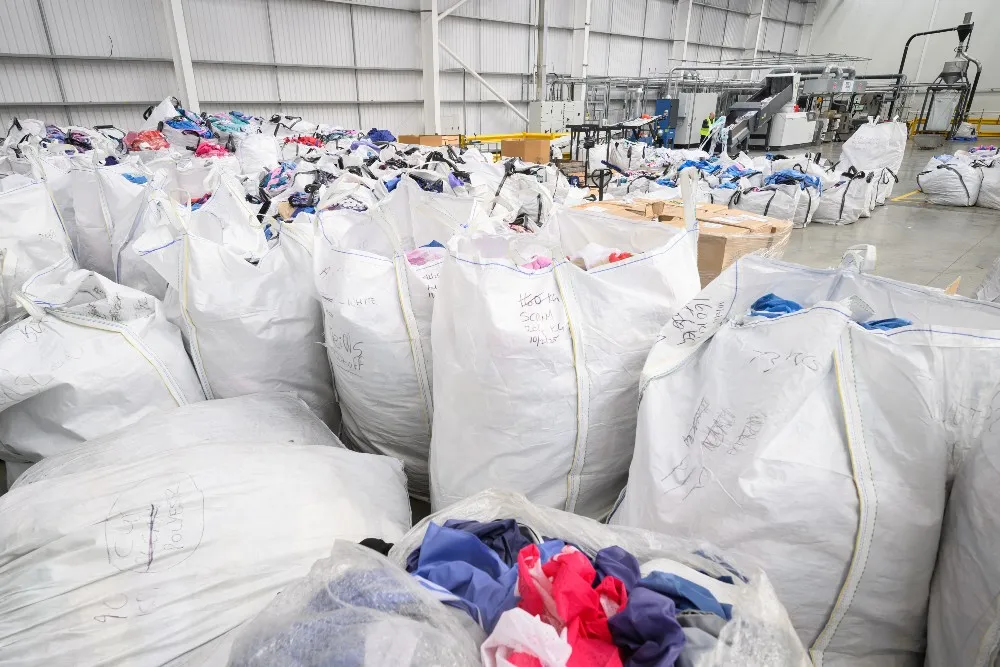
Member countries in the Dominican Republic-Central America Free Trade Agreement (CAFTA-DR) have a number of advantages that could make developing a textile-to-textile recycling ecosystem easier than previously thought. That’s one of the findings of a new study conducted by the University of Delaware in collaboration with the American Apparel & Footwear Association.
The report, “Strengthening Textile-to-Textile Recycling Capacity in the U.S.-Dominican Republic-Central America Free Trade Agreement Region,” examined the current state of textile-to-textile recycling in CAFTA-DR nations, noting challenges to and opportunities for growth. Study authors Emilie Delaye and Sheng Lu of the University of Delaware interviewed textile industry stakeholders and analyzed publicly available industry information to analyze the textile recycling industry in countries such as Guatemala, Ecuador and Nicaragua, identifying existing advantages and areas for improvement.
Related Stories

AAFA Reports to USTR on Foreign Trade Barriers
US Apparel Exports Could Sink 5% if Fees on China-Linked Ships are Imposed, Fashion Group Warns
With its geographic location near the United States, the region has emerged as a significant nearshoring destination for the apparel supply chain. This will play an important role in the region’s growth as a textile-to-textile recycler, as its existing manufacturing capacity, geographic proximity and preferential market access make CAFTA-DR companies more appealing partners for U.S. apparel brands and retailers.
The study evaluated CAFTA-DR member nations on five criteria related to textile recycling—waste and collection sorting, recycled fiber production, yarn manufacturing, fabric manufacturing and garment manufacturing.
Of the countries the study examined, Guatemala currently has one of the region’s most advanced textile-to-textile recycling ecosystems.
Source link