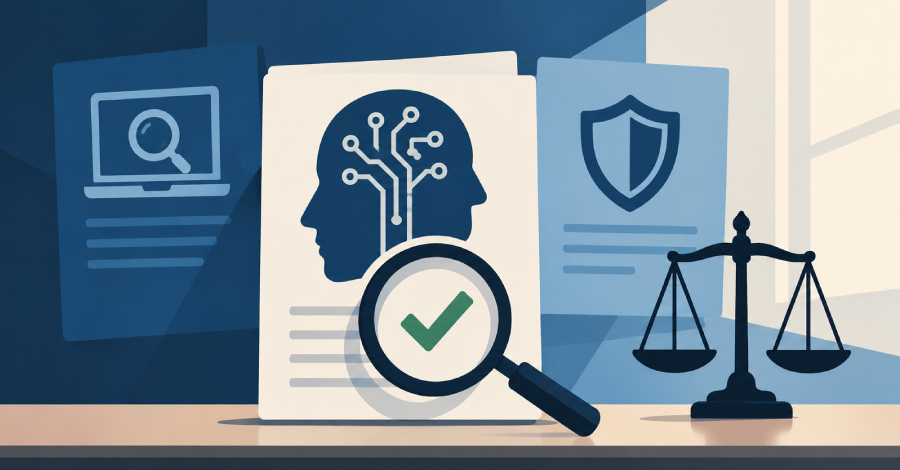
AI is already part of digital forensics and incident response work, with or without a policy in place to govern it. The issue is that these tools are growing more confident in their own output faster than practitioners are developing reliable ways to verify it. Without governance models and validation standards in place, that gap compounds and rarely stays contained to a workstation: an unverified finding can end up in a forensic report, a deposition, or in court.
At SANS, we created two new AI frameworks this year to help address this challenge: the Digital Forensics & AI Investigations Framework, which we mapped to the trusted standards established by the Scientific Working Group on Digital Evidence (SWGDE), and the Incident Response & AI Investigations Framework, which we mapped to the NIST Cybersecurity Framework 2.0. Both frameworks rest on the same principle: AI can accelerate investigative work, but the human examiner remains the final authority at every phase.
In digital forensics, validating an AI finding starts at the source file. A tool that doesn't show its reasoning has already produced an unreliable result, regardless of the confidence score attached to it. A tool that cites the specific file it parsed — for example, a claim that browser history came from Chrome's own database — gives an examiner somewhere to start. The claim is plausible at face value, but it still has to be confirmed independently before anyone treats it as fact.
I think of a high-confidence AI output the way I'd think of a third grader insisting the homework is finished.
Source link