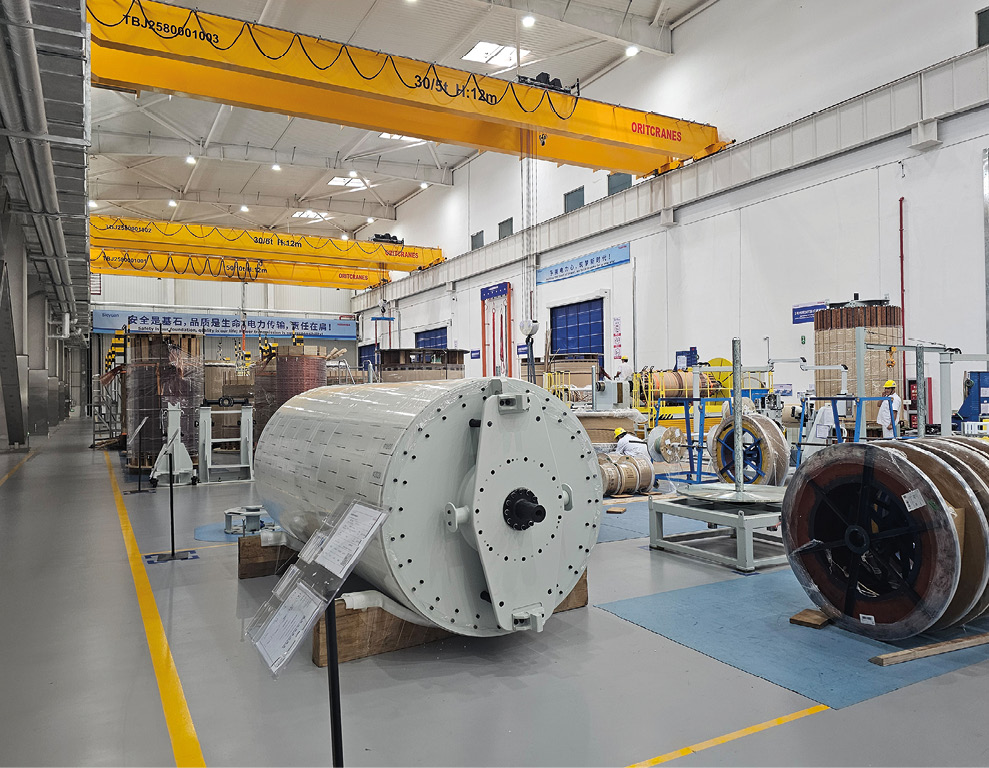
US President Donald Trump signed Executive Order 14421 on Aug. 26, declaring a national emergency to secure the US bulk-power system. The order covers equipment including substation transformers, high-voltage circuit breakers and grid-connected inverters, creating a new national-security screen for foreign-produced bulk-power equipment. The issue was not that equipment available for import suddenly became technically inferior. The rules governing procurement risk had changed, and developers had to react accordingly.
For Levona, this meant reopening the procurement process, qualifying alternative equipment and working against the clock to protect the project’s commercial operation date. Eventually, we identified a US-based engineering, procurement and construction (EPC) supply path with a main power transformer and breaker available on a more favorable schedule than a new manufacturing slot. It solved a schedule problem, but at a cost roughly 40% above the solution from China we had been evaluating before the policy change.
That was not the only repricing event affecting US solar in 2026. In August, a Section 232 action on polysilicon and derivative products changed the module procurement environment. Module proposals that had been around $0.27/W for our project moved into the low-$0.40/W range in some cases. The FCC’s August modification of the Covered List for power inverters added another compliance screen. Each event was manageable on its own. Together, they forced repeated revisions to project capex and procurement strategy.
Recent exclusive power purchase agreement (PPA) negotiations with a large technology-sector power buyer have made the sensitivity of the model particularly clear. We have been updating equipment costs, transmission requirements, nodal and capture-price assumptions, and contract risk allocation as the market moves.
Source link