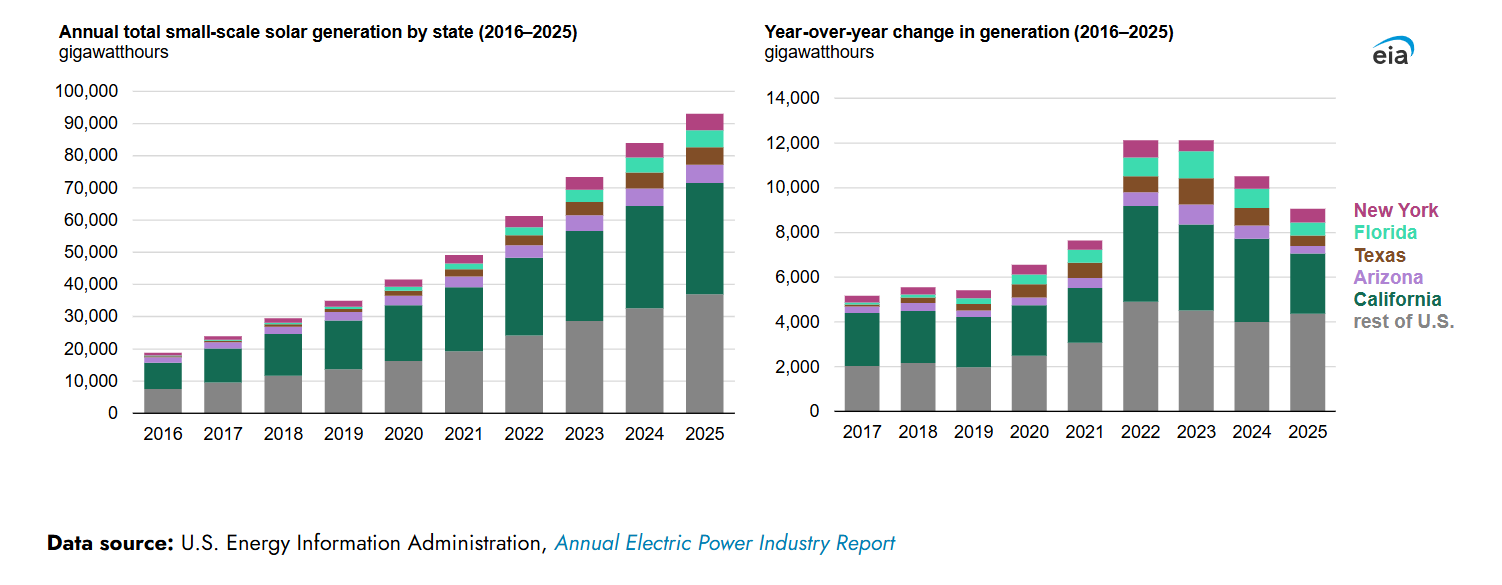
Generation from U.S. small-scale solar photovoltaic systems smaller than 1 MW reached 92,979 GWh, up from 18,812 GWh a decade ago, according to the latest Annual Electric Power Industry Report from the U.S. Energy Information Administration (EIA).
California led national generation in 2025, accounting for 37% of total rooftop solar output at 34,411 GWh. Between 2024 and 2025, California rooftop solar generation grew by 8% as total operating small-scale capacity expanded from 18 GW to 20 GW.
National generation growth peaked in 2022, when total small-scale output expanded 25% year-over-year amid record capacity additions. The expansion was partly fueled by regulatory deadlines, including California’s transition from Net Energy Metering (NEM) 2.0 to the Net Billing Tariff (NEM 3.0) in April 2023. Grandfathering provisions under NEM 2.0 drove higher installation volumes before export compensation rates were reduced.
Arizona ranked second in national generation in 2025, delivering 5,795 GWh, or more than 6% of the national total. Arizona rooftop generation grew 6% in 2025, down from a peak annual growth rate of 22% recorded between 2022 and 2023. Growth in the state continues to be supported by a 25% state income tax credit alongside local utility incentives.
Texas and Florida experienced substantial growth over the decade, backed by property tax exemptions and state-specific programs. Annual small-scale solar generation in Texas grew from 391 GWh in 2016 to 5,408 GWh in 2025. Over the same period, Florida generation expanded from 205 GWh to 5,198 GWh.
New York ranked as the fifth-largest small-scale solar producer, supported by state incentive programs and technology improvements despite lower regional solar irradiance.
Source link