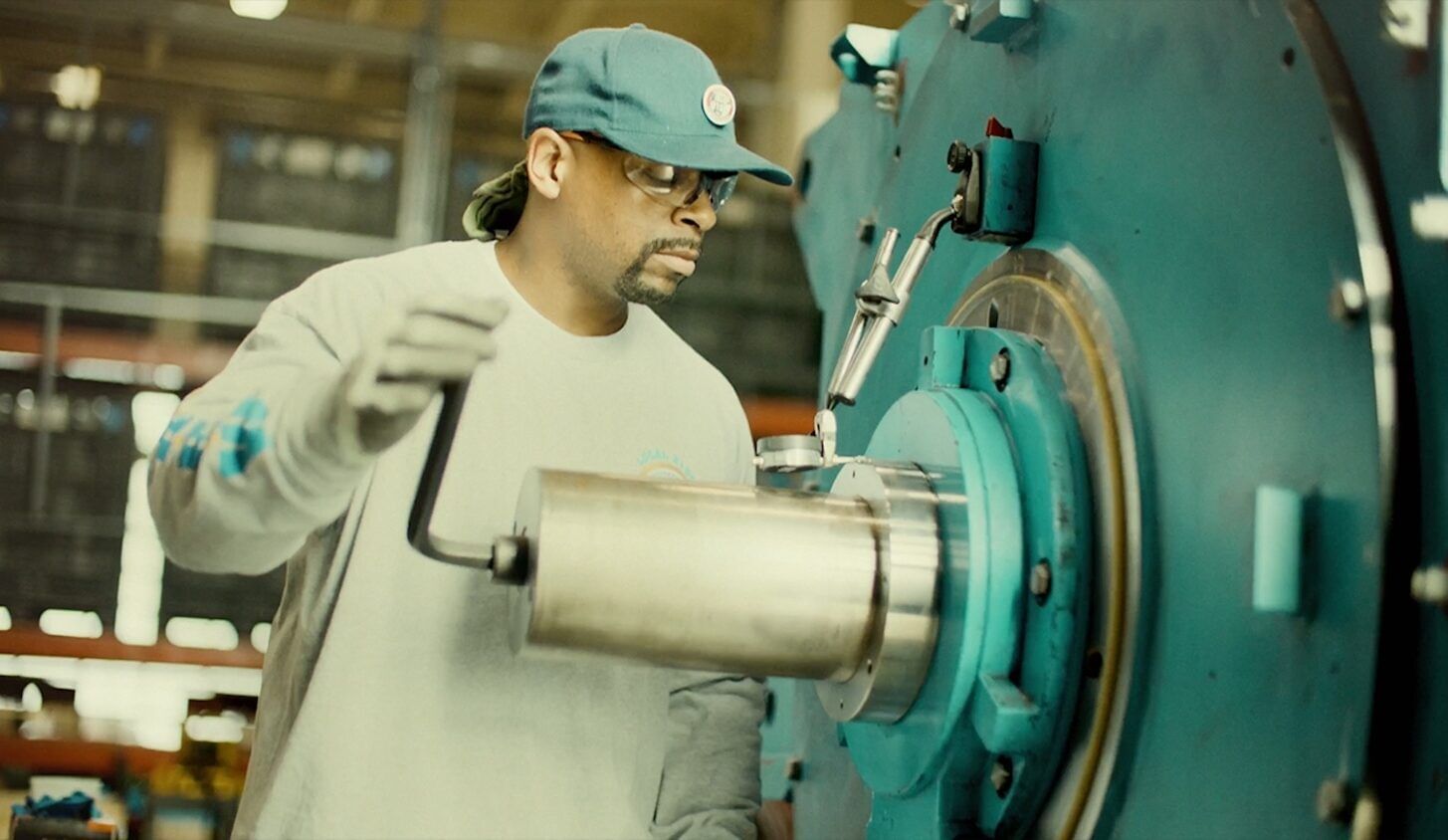
Akinlana Abdalla worked for years inside a sprawling Milwaukee factory repairing generators for onshore wind turbines. Ingeteam, a Spanish manufacturer, opened the plant in 2011 to serve America’s clean energy industries, fixing and producing equipment from its industrial site between the Milwaukee Brewers baseball stadium and the shores of Lake Michigan.
As Ingeteam was settling into Wisconsin’s largest city, a new industry was emerging off the country’s eastern coast. Big energy firms, utilities, and state and federal officials were preparing to build the first U.S. offshore wind farms to provide power for the region’s densely populated and land-constrained communities. Since American companies didn’t yet make key turbine parts, most of those pieces would come from Europe.
This seemed like a promising new opportunity for workers like Abdalla, who is now a business representative for the factory’s union shop, the International Brotherhood of Electrical Workers Local 2150.
Offshore wind developers needed domestically made generators, turbine towers, steel foundations, and other equipment to help drive down their high construction costs and reduce project timelines. Building up a substantial U.S. supply chain was expected to require nearly $23 billion in investment by 2030 to meet rising demand for components, port infrastructure, and specialized vessels.
By late 2022 , Ingeteam’s Wisconsin plant was gearing up to produce more onshore turbine generators — the machines that convert the energy harnessed by propeller-like blades into electricity — partly thanks to federal incentives under the Inflation Reduction Act passed that August. “ There’s this hunger right now to make Milwaukee the capital of the renewable energy revolution,” Garan Chivinski, a former Ingeteam human resources manager, told BizTimes Milwaukee that fall.
Source link