A research team from Qatar’s Hamad Bin Khalifa University has investigated the techno-economic performance of different pole-mounted photovoltaic configurations with the aim of identifying the most suitable designs for off-grid applications in hot, arid environments with limited maintenance access.
These systems use solar modules attached to or integrated into poles to power off-grid equipment such as streetlights, cameras, sensors, and telecommunications devices.
“Pole-mounted solar systems have traditionally been selected based on a single metric: cost per watt. Our year-long field measurements show why engineers also need to consider maintenance access, shading, and wind loads,” corresponding author Khaled Aʼamar told pv magazine. “To our knowledge, this is the first framework for selecting off-grid, pole-mounted PV configurations grounded in a full year of experimental measurements.”
Aʼamar said the researchers developed indices to quantify the additional design requirements associated with different constraints, alongside a six-criterion framework to help engineers select the most suitable configuration for a given site.
“The next step is to take these findings from the test bench to the street,” he said, adding that Sunray Solutions, where he serves as chairman, is seeking partners for pilot deployments of pole-integrated systems.
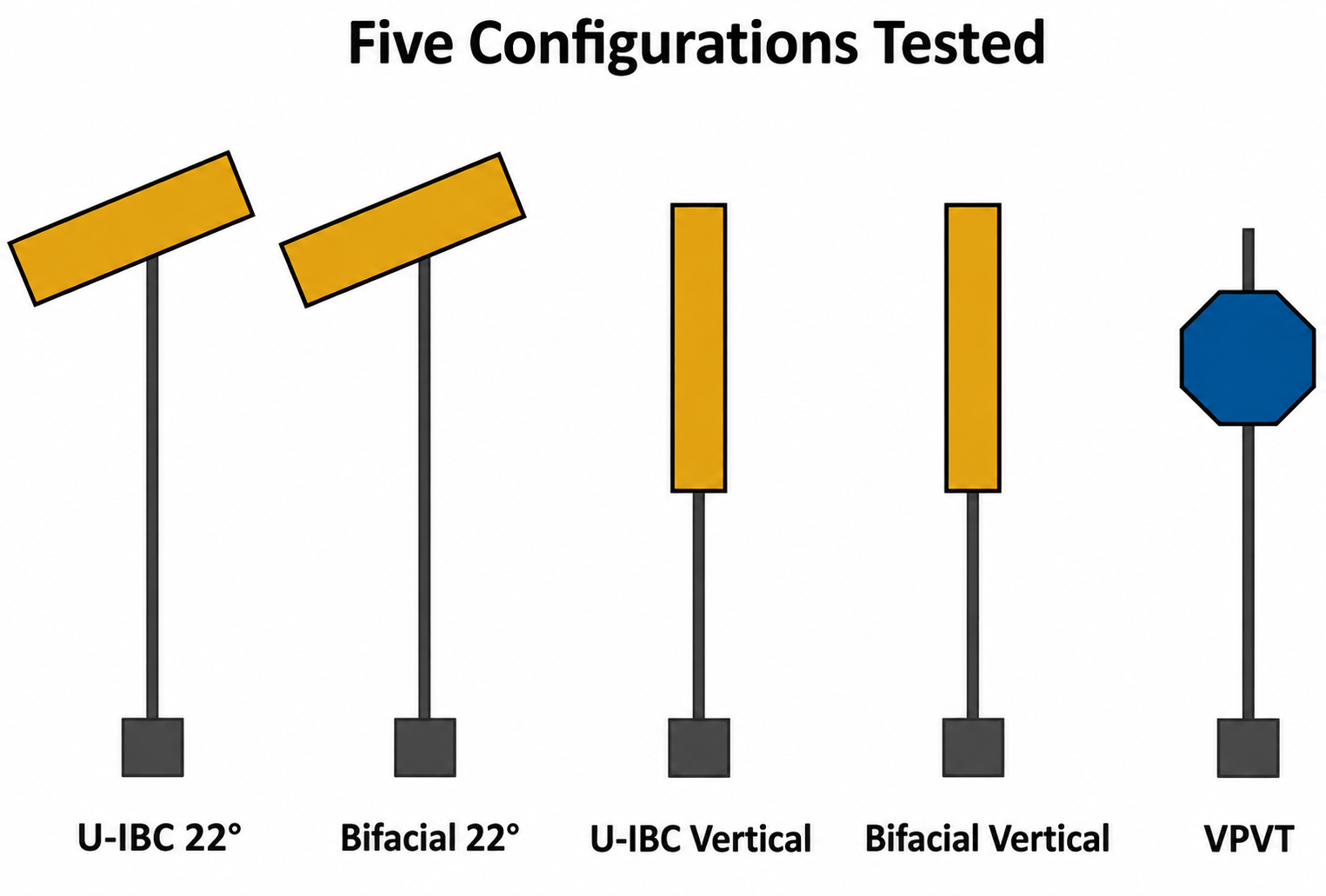
The researchers monitored five PV configurations at the Qatar Environment and Energy Research Institute (QEERI) outdoor test facility in Doha between August 2025 and August 2026. The configurations included U-IBC and bifacial modules mounted at a 22-degree tilt or vertically, as well as an octagonal vertical PV tube. The team recorded electrical output and environmental conditions at one-minute intervals, retaining 311 days of data after screening.
Source link