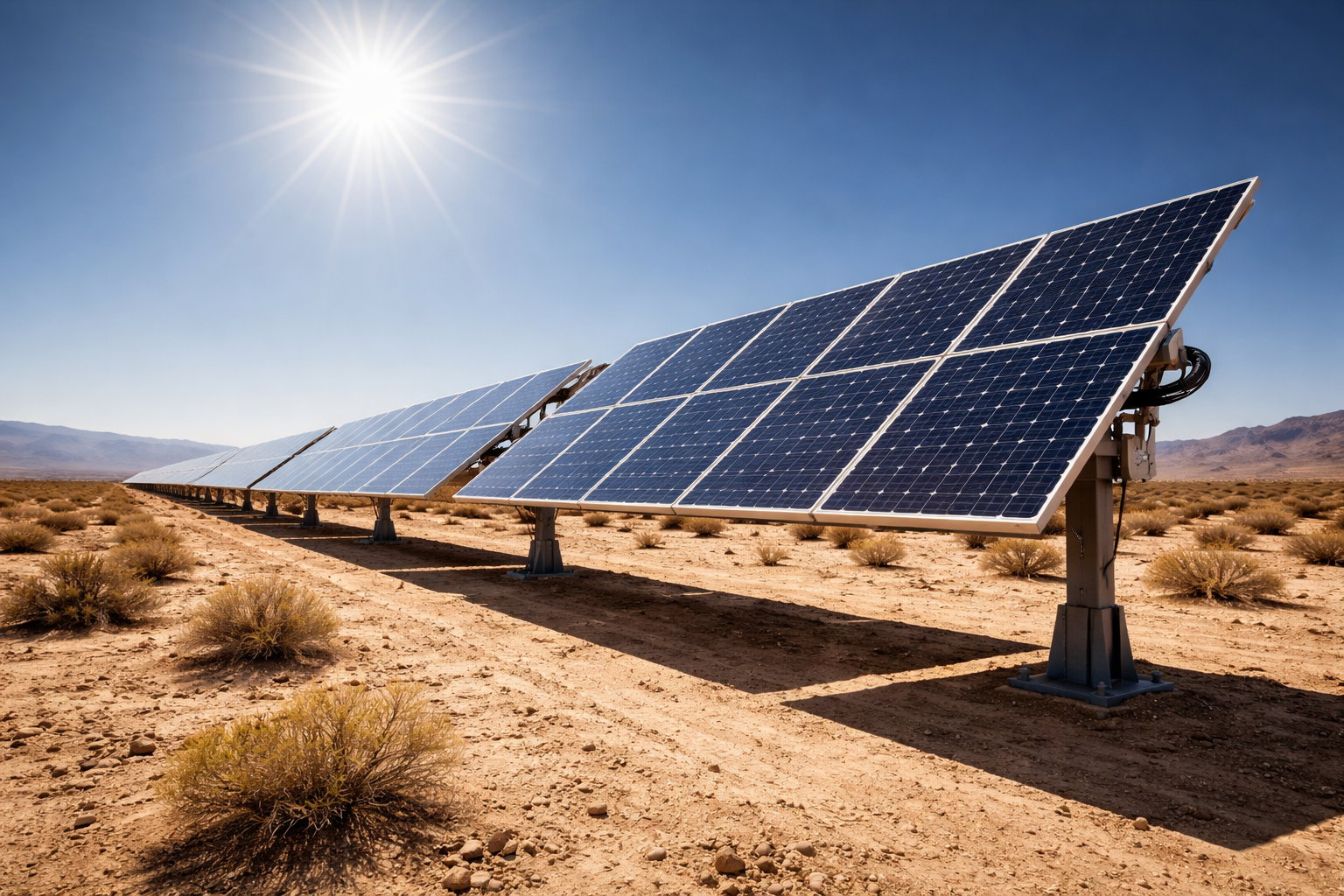
A research team in China has investigated how large-scale solar installations affect soil organic and inorganic carbon pools in desert environments, aiming to identify the main drivers of carbon accumulation and the threshold effects governing soil carbon dynamics. Soil organic carbon (SOC) helps retain water and nutrients, supporting vegetation growth, while soil inorganic carbon (SIC), stored mainly in carbonate minerals, represents a major carbon reservoir in arid regions.
“The coupling of large-scale photovoltaic arrays with native ecosystems has formed photovoltaic ecosystems with unique energy and material exchanges, impacting key ecological processes like carbon cycling,” the researchers explained. “Deserts are a critical carbon pool with high ecological sensitivity; their stability is vital for the global carbon balance. However, disturbances from PV power stations may alter soil structure, resulting in the destabilization of carbon pools and changes in nutrient availability.”
The researchers conducted field measurements in 2023 and 2024 at the Talatan photovoltaic power station on the northeastern edge of China’s Qinghai–Tibet Plateau. The 1 GW facility covers 67 km2 and sits at an average elevation of 2,910 meters. Soil sampling took place in March, August, and December to capture freeze-thaw, non-freezing, and freezing conditions, respectively.
The team compared areas equipped with fixed, semi-tracking, and tracking mounting systems, selecting three random sampling points for each configuration. At each point, the researchers established 1 m × 1 m sampling plots beneath the panels, along their front drip lines, and between the arrays. They collected soil samples at depths of 0-10 cm, 10-20 cm, and 20-40 cm.
Source link