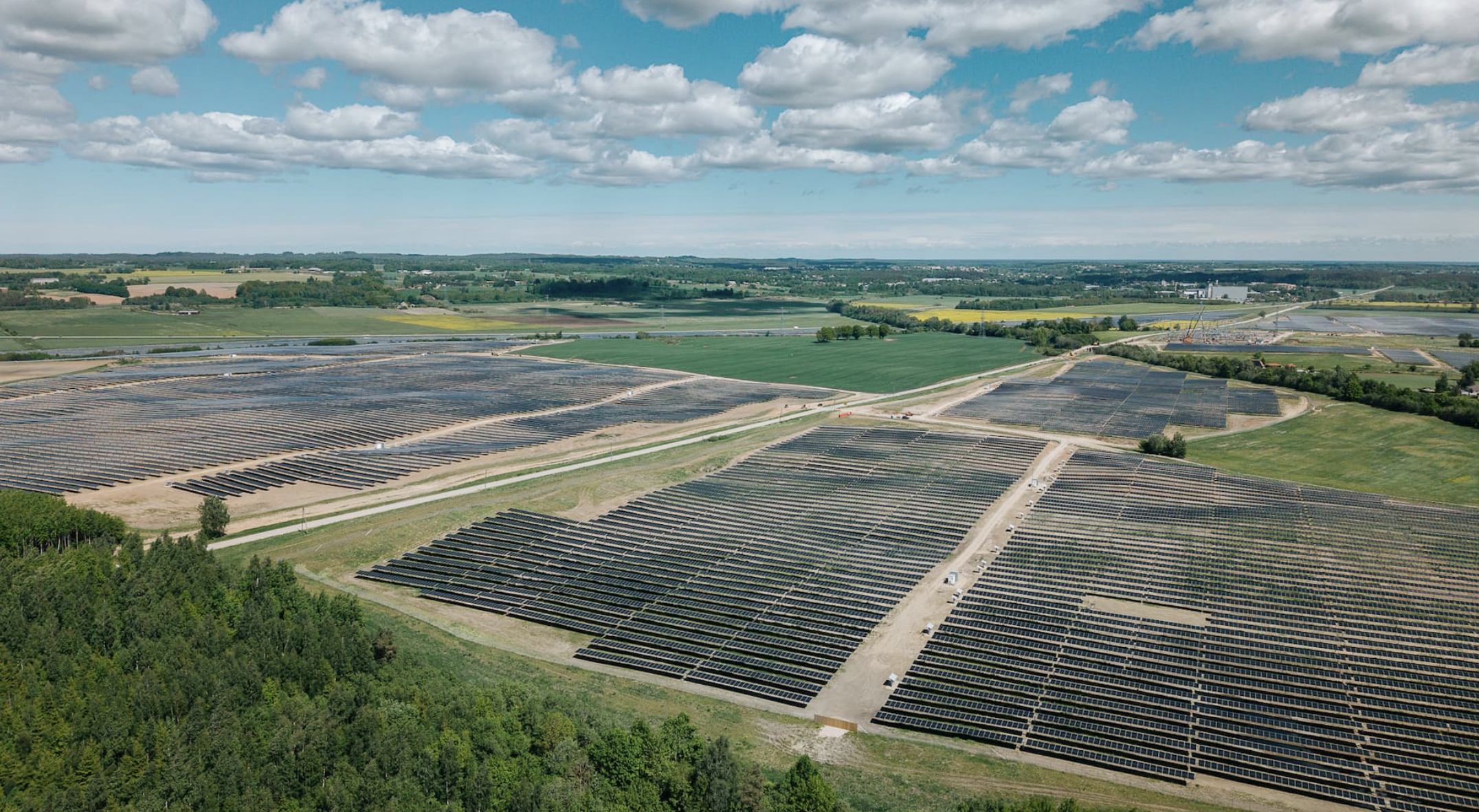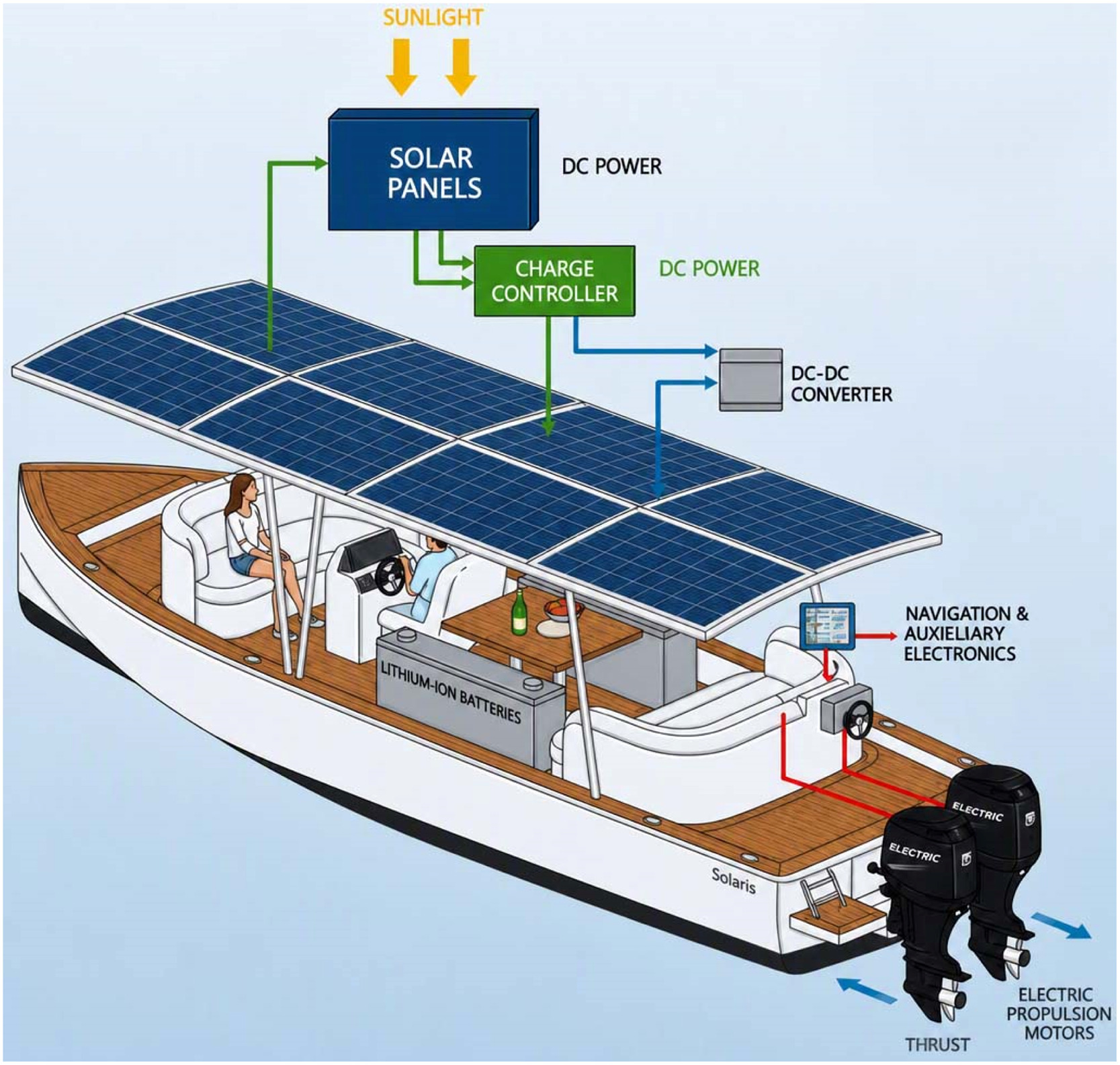
A research team from Canada’s Memorial University of Newfoundland has designed a solar-powered pleasure boat. The researchers developed and sized the system using a two-stage evaluation method combining energy yield estimates from HOMER Pro with multi-domain dynamic modeling in MATLAB/Simulink.
“The real-world applicability of this solar-electric drive system underscores significant environmental and operational benefits for the marine sector,” the researchers said. “By eliminating onboard fossil-fuel consumption, the proposed architecture avoids localized greenhouse gas emissions, reduces acoustic pollution, and prevents potential fuel-spill contamination in fragile marine ecosystems.”
The researchers designed the solar-electric propulsion system for an 11.8-meter-long, 5.8-meter-wide boat capable of accommodating five to six adults, taking into account solar conditions in Larnaca, Cyprus. Based on a full-load displacement of approximately 2,250 kg and a target speed of 5.4 knots, they selected two 2.5 kW brushless DC motors, with an estimated energy requirement of 30 kWh for six hours of daily operation.
Using HOMER Pro and local solar resource data showing average daily irradiation of 5.43 kWh/m2, the researchers assessed power generation, energy balance and life-cycle economics. The proposed system features 32 solar modules rated at 330 W each, providing a combined capacity of 10.56 kW across approximately 62.4 m2. The modules are divided into four independently controlled subarrays. Eight lead-acid batteries form a 48 V, 410 Ah battery bank with a nominal storage capacity of 19.68 kWh, providing two hours of backup power.
The team modeled the system in MATLAB/Simulink, connecting each subarray to a common 48 V DC bus through a boost converter equipped with incremental-conductance maximum power point tracking (MPPT).
Source link