An international research team has developed an induction heating-assisted delamination method for end-of-life photovoltaic modules to improve recyclability and facilitate the recovery of individual components.
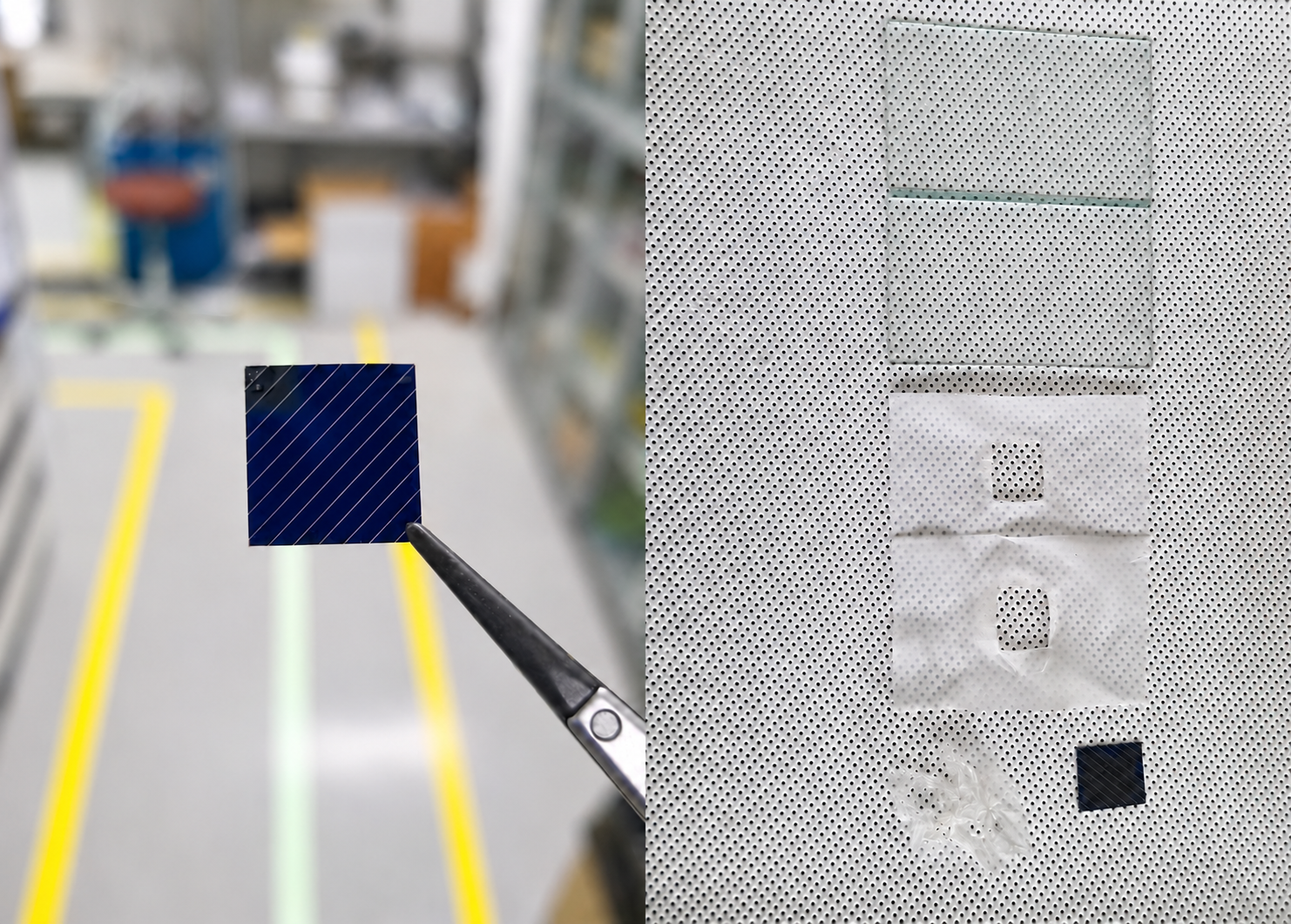
“We designed a glass-glass photovoltaic module that is easier to take apart at the end of its life,” corresponding author Yonghwan Lee told pv magazine. “Using induction heating, we rapidly separated the layers of our test module and recovered 99.8% of its original mass, including the glass, the silicon cell and the polymer encapsulant.”
Lee said the team was surprised by how quickly and cleanly the silicon cell separated using the new technique and modified module design.
“In our fastest test, the module layers separated in just 5 seconds. We recovered the cell intact, with no visible polymer residue on its surface, without having to remove the entire encapsulant layer first,” he said.
The researchers first used Comsol Multiphysics simulations to investigate induction heating in passivated emitter and rear contact (PERC) cells and heat transfer through the surrounding module layers. They examined the effects of operating frequency, coil current, coil-to-cell distance and electrode thickness on heating.
They then produced simplified samples comprising a 2 cm × 2 cm PERC cell laminated onto tempered glass with ethylene vinyl acetate (EVA) encapsulant, leaving the rear of the cell exposed. They tested the method using a water-cooled copper induction coil operating at 270 kHz to 300 kHz to rapidly heat the cell’s metal contacts, triggering localized EVA decomposition at the cell-encapsulant interface. The samples were suspended with the cells facing downward to enable gravity-assisted separation.
Source link