
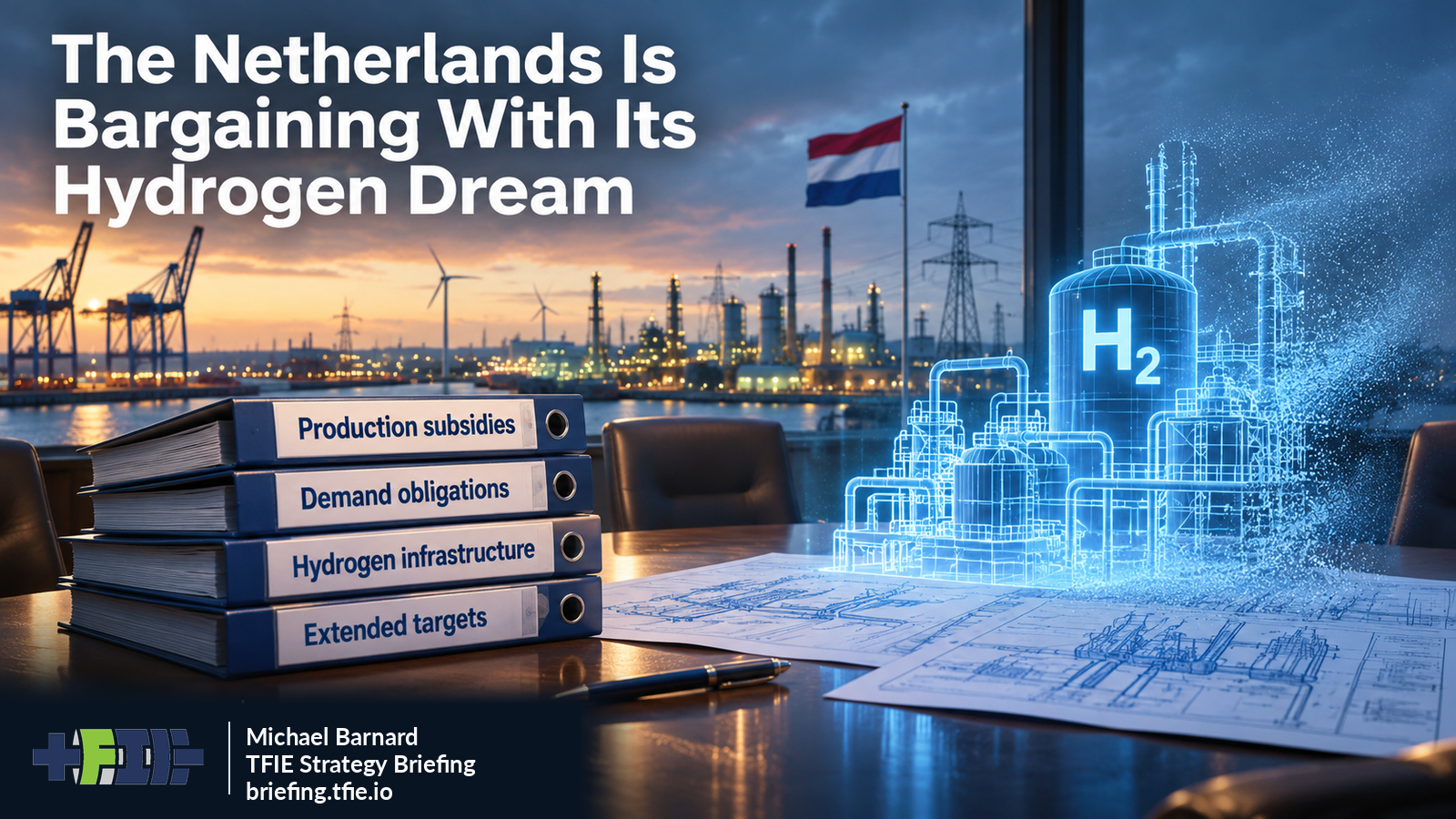
The Netherlands awarded €783.5 million in subsidies to seven green hydrogen projects in 2022. Together they were supposed to deliver 1,150 MW of electrolysis capacity. Four years later, four projects representing 550 MW have been cancelled, and none of the original seven is operating. The November 2 parliamentary answers also confirm that the government cannot say when electrolytic hydrogen will become commercially viable without dedicated subsidies. Another €780 million is reserved for a future subsidy round anyway.
The TFIE Strategy Briefing follows what happened to the Dutch projects, what the government’s own cost and demand revisions imply, and which industrial activities could prosper without the hydrogen market originally forecast.
The €783.5 million was awarded, not spent. Roughly €150 million had been disbursed under the programme when the parliamentary answers were published. That distinction matters, especially when assessing potential losses to taxpayers. It does not make the project record look good. The Dutch state has spent four years supporting a group of plants that has so far delivered no operating capacity, while almost half the planned megawatts have been withdrawn.
The price assumptions were difficult to defend from the start. Officials say the original subsidy decisions reflected expectations that renewable hydrogen would cost around €2/kg by 2030 and become competitive with fossil-derived hydrogen within a decade. Making a kilogram by electrolysis typically requires about 50–55 kWh of electricity. 75 per kilogram before capital recovery, maintenance, water treatment, compression or delivery. Buying electricity only during the cheapest hours lowers the energy bill but leaves the electrolyser idle for longer, increasing the capital cost per kilogram produced.
Source link